Greyed out
GameStop 193.60 · −153.91 · −44.29%
The bid did not run out. It was switched off. The crowd could sell; the crowd could not buy. It was the first time the place had ever told retail, in its own interface, exactly what it was.
The day's protagonist
The button GME
Move: 483.00 at the high, 112.25 at the low — and in between, buying was turned off
The crowd had gone to bed winning — the one night in a hundred years the joke ran the other way — and came back first in line at the open to watch GameStop print 483, the highest price it has ever traded. Then Robinhood, Interactive Brokers and others restricted it — along with AMC, BlackBerry, Bed Bath and Nokia — to position-closing only. Sell, yes; buy, no. What the crowd had built on one side of a trade could now only be dismantled: the stock fell to 112.25 before closing at 193.60, a seventy-seven percent round trip in a single session. The stated reason was plumbing — the clearinghouse's collateral demand had jumped overnight and the broker raised more than a billion dollars in hours to meet it. The reason the crowd heard was different, and it is the reason this page exists: for one morning the market's most democratic instrument worked in only one direction.
The deeper account
This page is the epilogue the previous one promised: the January 27 entry ends with 483 → 193.60 in its almanac, and here it is at full length.
The first page of retail's era in this book is called The locked door — March 2, 2020, the morning the crowd finally showed up and the building had closed the night before. This door was different. It locked from the inside.
Restriction was not unique to one broker — Interactive Brokers, TD Ameritrade and others limited the same names, and several had curbed options days earlier. The story is structural, not a single villain. Structural is the word they use when it is nobody's fault and it happens to you anyway.
The mechanism was real: clearing deposits scale with volatility and concentration, and a broker whose customers all hold the same position must post against it. Free trading has a collateral bill, and it came due in a morning.
A class action was filed the same day; congressional hearings followed in February; the SEC's staff report arrived in October and found no single cause. Nothing was ever quite proven and nothing was quite the same.
The page keeps the grey of a disabled control — the only color in this book that is a user-interface state. It was retail's interface. That is why the page keeps it.
The artifact
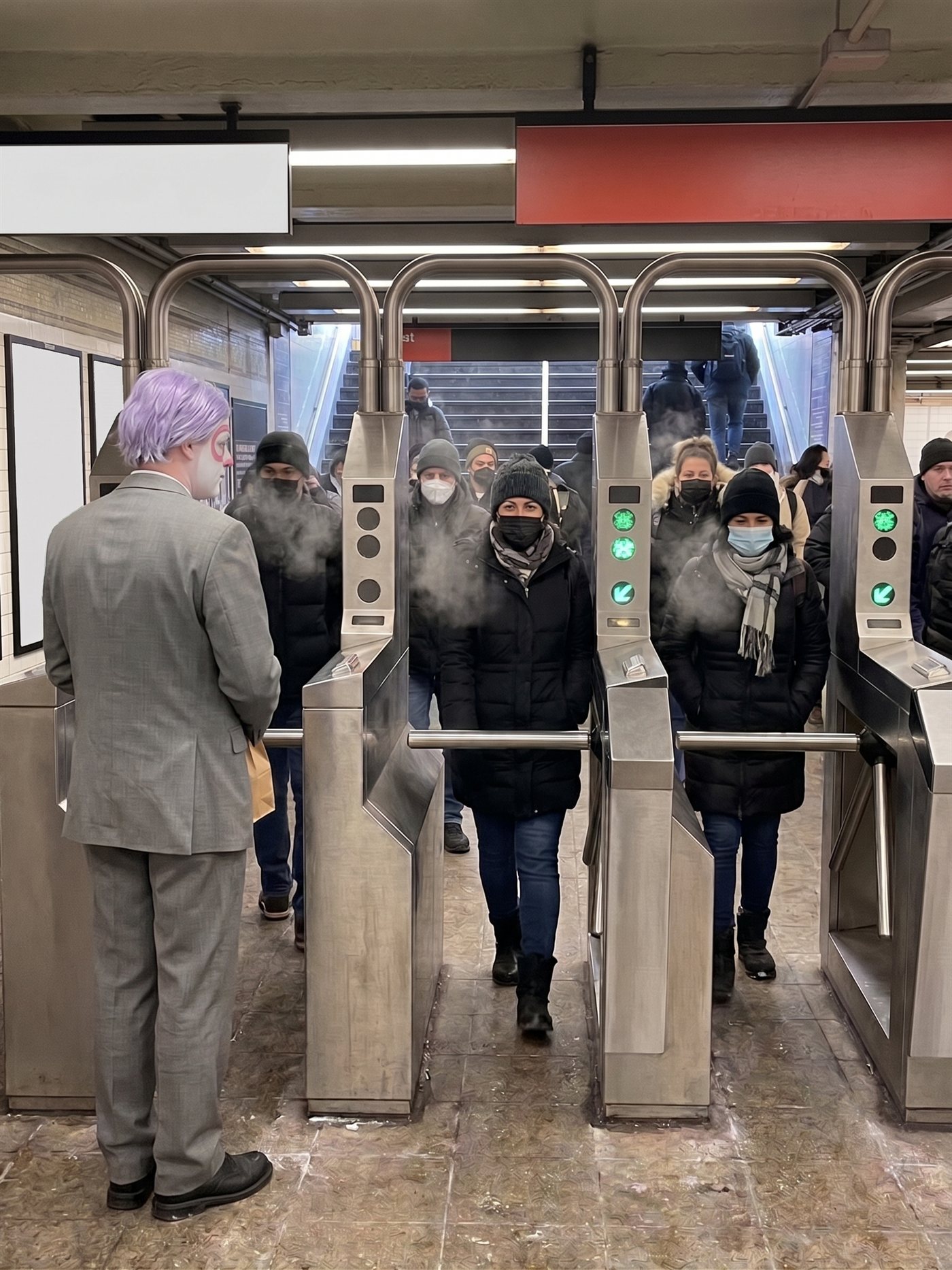
The tag is the day: one gate in the whole array pointed inward, and the tag on it says exit only. The reason given was plumbing — a clearing-house deposit that came due overnight, a billion raised in hours to meet it — and the reason the crowd read was the tag itself. Sell, yes; buy, no. For one morning the market's most democratic instrument worked in only one direction, and the crowd stood at the locked arm watching everyone else stream out.
Read the tag
Printed text is shown plain; handwritten entries are shown in script.
TRANSIT AUTHORITY · FARE ARRAY · SERVICE TAG · GATE Nº 1 · ENTRY
- DIRECTION: exit only.
- POSTED: before the morning rush — REASON: deposit due at the clearing house.
- REPORTED BY: everyone, at once.
- NOTES: the arm turns one way. the lamps on this gate dark. the exit row glows green.
- EXIT ONLY A CLASS ACTION WAS FILED BY LUNCH · HEARINGS IN FEBRUARY · THE HIGH PRINTED MINUTES BEFORE THE ARM LOCKED: 483
GameStop printed 483.00 — the highest price it has ever traded — in the opening minutes, then brokers restricted it to position-closing only. It fell to 112.25 before closing at 193.60, down 44.29 percent: a 77 percent round trip inside one session. The broker raised over a billion dollars in hours to meet the clearing deposit. The index, its margin calls already paid, rose 0.98.
The ledger — what actually happened
| Measure | Close | Change | Marginalia |
|---|---|---|---|
| GameStop (GME) | 193.60 | −153.91 · −44.29% | from 347.51 — the day after the squeeze, and the day the buying stopped |
| The high | $483.00 | the all-time high of the squeeze, printed in the opening minutes — noted here unsealed, as the house does for records set on falling days | |
| The low | $112.25 | reached after the restriction; a 77% round trip inside one session | |
| The reason given | collateral | a clearinghouse deposit call; the broker raised over $1 billion in hours to keep trading | |
| S&P 500 | 3,787.38 | +36.61 · +0.98% | the index shrugged — yesterday's margin calls were already paid |
Sources
- CNBC — Robinhood restricts trading in GameStop, other names involved in frenzy — https://www.cnbc.com/2021/01/28/robinhood-interactive-brokers-restrict-trading-in-gamestop-s.html
- CNBC — Robinhood CEO says it limited buying in GameStop to protect the firm and protect our customers — https://www.cnbc.com/2021/01/28/robinhood-ceo-says-it-limited-buying-in-gamestop-to-protect-the-firm-and-protect-our-customers.html
- CNN Business — Class-action lawsuit filed against Robinhood following outrage over GameStop stock restriction — https://www.cnn.com/2021/01/28/investing/lawsuit-robinhood-gamestop-wallstreetbets
- Robinhood market-data feed — GME day bar (unadjusted): O 265.00, H 483.00, L 112.25, C 193.60, V 58,815,805