The summit of the boom
DOW JONES 119.62 · +0.99 · +0.83% · the top of the after-war
Nothing happened. That is the entire character of the day and the reason it is here. The war had been over for a year, the factories that had fed it were feeding a consumer boom instead, wages and prices were climbing together, and the market closed a fraction of a percent higher at a level it would not touch again until 1925. There was no bell and no headline and no sensation of arrival, because arrival is not a thing anyone can feel from inside. What the record shows is a quiet Monday and then, beginning almost at once and running for twenty-one months, the sharpest general fall in prices the country has ever measured.
The day's protagonist
The boom — no symbol.
Move: 119.62 — and then −46.6% in twenty-one months
The post-war economy had been running hot since the armistice: war plants converted to consumer goods, a backlog of demand released all at once, credit easy, and prices rising at a rate that would now be called an emergency. The market topped on November 3, 1919 at 119.62. What broke it was policy. The Federal Reserve, which had held rates down through the war to help the Treasury finance it, raised the discount rate sharply into 1920 and held it there, and the result was the depression of 1920 and 1921: wholesale prices fell by something close to a third, unemployment went to double figures, and the Dow ground down for twenty-one months to close at 63.90 on August 24, 1921 — a fall of 46.6 percent from this Monday. That August day is the next page in this archive. The two are the same event seen from its two ends.
The deeper account
Peaks are only ever identified afterwards, which is why this archive keeps so many of them. There is no contemporary account of November 3, 1919 that treats it as anything at all.
The 1920–21 deflation is the largest in the American record and is now studied mostly as an argument: it was severe, it was short, and it was ended without the fiscal response that later downturns received. Whatever else it settles, it produced the floor that the whole of the 1920s was built up from.
The archive's other peaks rhyme with this one and none of them announced itself either — September 3, 1929 on the hottest day of the year, August 25, 1987, March 10, 2000, October 9, 2007, February 19, 2020. The pattern is not that tops are dramatic. It is that they are quiet, and that quiet is not evidence of anything.
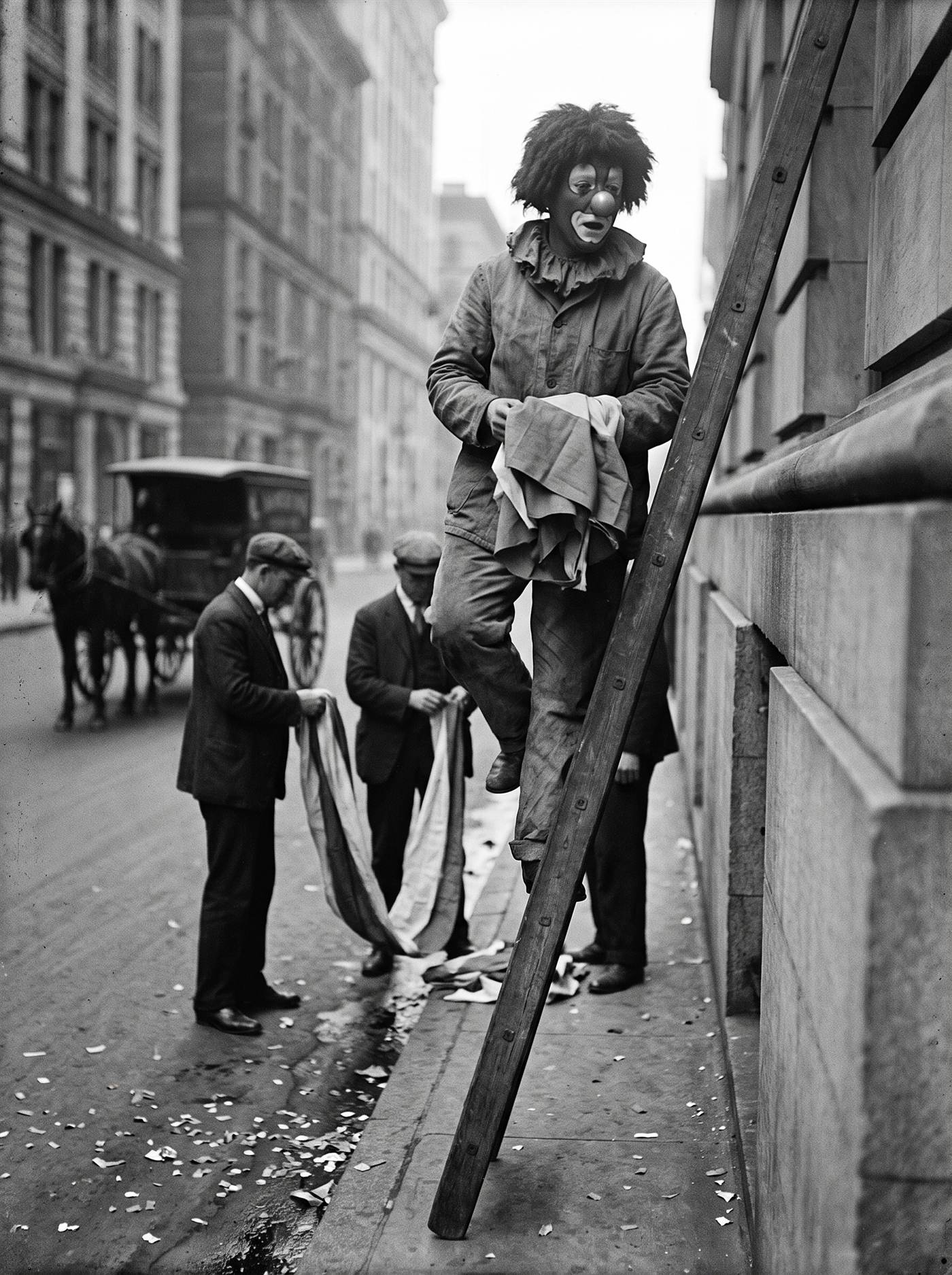
The gold on this page is a year old and lying in the gutter. The parade was in the spring.
The artifact
A peak is only ever a peak afterwards, and this one arrived on a Monday with no news attached to it. The war had been over a year, the plants that had supplied it were supplying a consumer boom instead, prices and wages were climbing together, and the Federal Reserve — which had held rates down through the war to help the Treasury finance it — was about to decide that this was the problem and tighten hard. The industrials closed at 119.62 and did not see that level again until 1925. From here the road runs downhill for twenty-one months, through the sharpest deflation the country has ever recorded, to 63.90 on August 24, 1921, which is the next page in this archive. The work order is the archive's own invention; the numbers on it are not.
Read the order
Printed text is shown plain; the foreman's entries are shown in script.
DECORATIONS, REMOVAL OF · WORK ORDER · CITY CONTRACT — Monday, November 3, 1919
- Take down and store all victory bunting, staffs and swags, lower Broadway and adjacent.
- erected: MAY · FOR THE HOMECOMING · standing: 23 WEEKS
- condition: WEATHERED · NOT TO BE RE-HUNG · labour: 4 MEN · 1 DAY
- store or discard:
STOREdiscard - FOREMAN'S HAND: the paper in the gutters is from the parade. it has been rained on since june. nobody has swept it because nobody minds it.
- the industrials closed at 119.62 — the highest of the boom. TWENTY-ONE MONTHS LATER THEY CLOSED AT 63.90.
November 3, 1919 was the closing high of the post-war boom at 119.62, a level not exceeded again until 1925. The Federal Reserve raised the discount rate sharply into 1920; the depression of 1920–21 followed, with the steepest general fall in prices in the American record. The Dow bottomed at 63.90 on August 24, 1921 — a decline of 46.6 percent from this Monday.
The ledger — what actually happened
| Measure | Close | Change | Marginalia |
|---|---|---|---|
| Dow Jones | 119.62 | +0.99 · +0.83% | the highest close of the post-war boom; not exceeded again until 1925 |
| From here | −46.6% | 119.62 → 63.90 on August 24, 1921 — twenty-one months, and the next page on this shelf | |
| What broke it | the discount rate | the Federal Reserve tightened sharply into 1920 after holding rates down to finance the war | |
| On the day | no news | a Monday of no particular character; the peak is entirely retrospective |
Sources
- MeasuringWorth — Daily Closing Values of the Dow Jones Average (October 30 – November 7, 1919, queried directly; and August 1921 for the trough) — https://www.measuringworth.com/datasets/DJA/
- The Depression of 1920–21 — the post-war boom, the Federal Reserve's tightening, and the scale of the deflation that followed
- The 119.62 close of November 3, 1919 as the peak of the post-war advance, and the 46.6 percent decline to August 24, 1921 (computed from the daily series above)