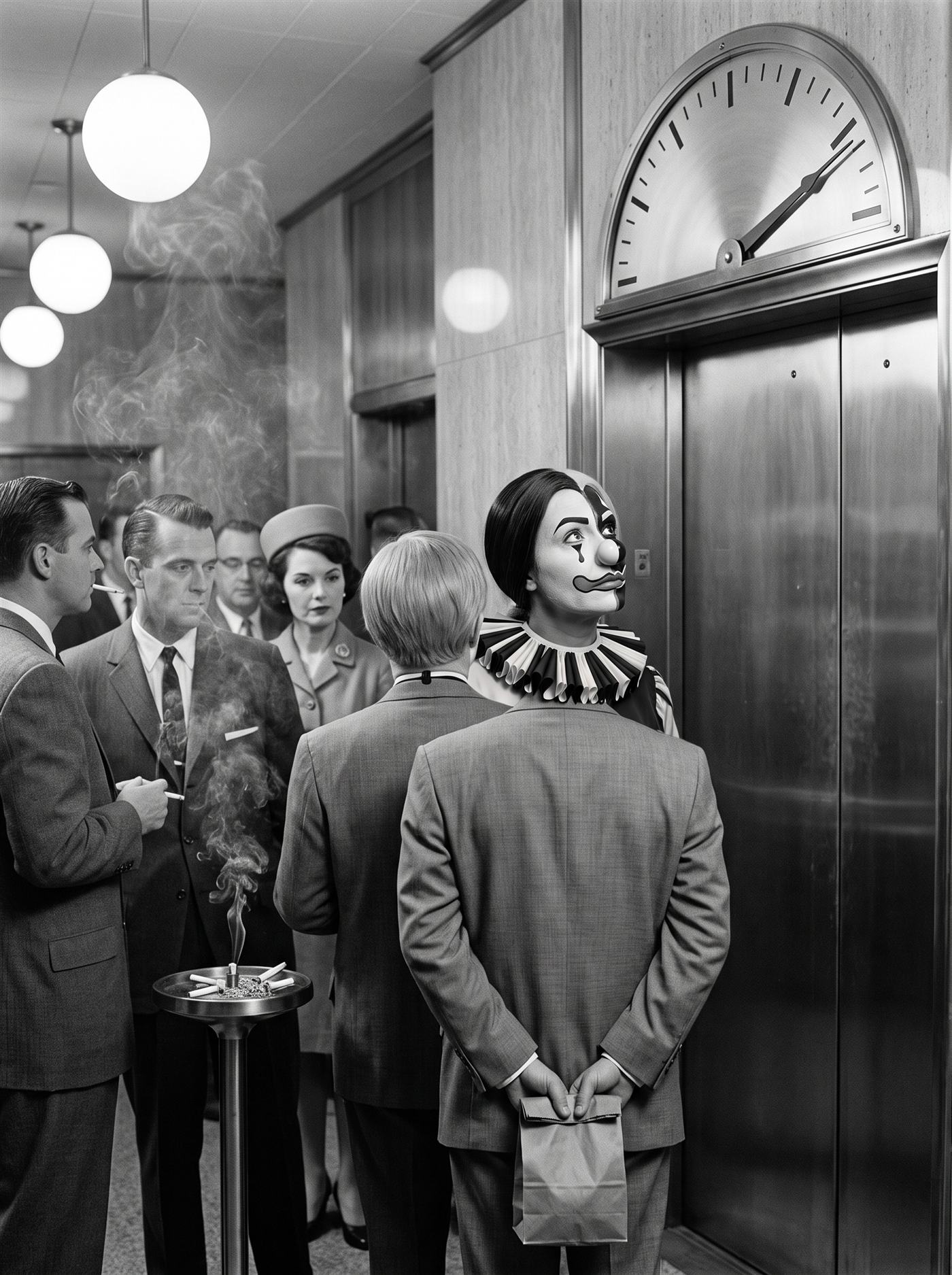
One tick short
DOW JONES 995.15 · +4.12 · +0.42% · one tick short
Since the middle of January the hourly computations had kissed the four-figure mark — 1000.50 on the eighteenth, and three more crossings after that — but a close is a close, and the closes kept arriving in the 990s like an elevator that slows before the top floor. This Wednesday's was 995.15. Nobody knew it was the arrival: up 85.7 percent from the Kennedy-slide bottom in under four years, the Great Society roaring, the war spending flowing — and the brake already set, two months earlier, by four votes to three. The next close above this one came six years and nine months later, by eleven cents. The durable escape took sixteen years. The needle stopped one tick short and the whole country stood in the lobby, watching it not move.
The day's protagonist
The four votes — no symbol.
Move: 4–3, December 3, 1965 — the brake set two months before the top
The top's cause predates it, which is the usual way: on December 3, 1965, the Federal Reserve's board voted four to three to raise the discount rate from 4 to 4.5 percent — the institution's first real move against the inflation that Vietnam and the Great Society were stoking — and two days later Lyndon Johnson summoned Chairman William McChesney Martin to the Texas ranch and told him, to his face, that he had run a rapier into his President and that it was a despicable thing to do. Martin's reply belongs in the ledger of the century: this is one of those few occasions where the Federal Reserve Board decision has to be final. The market climbed nine more weeks on momentum — the hourly ticks kissing 1000, the papers drafting their four-figure headlines — and stopped at 995.15 on the ninth of February. Then the arithmetic Martin had voted for arrived: the credit crunch of 1966, a quarter off the Dow by October, and after it inflation that averaged 4.5 percent a year where 1.5 had been the custom. The elevator did not reach the floor the dial promised until November 1972 — by eleven cents — and did not stay there until late 1982, sixteen years from this Wednesday, when a page this archive already keeps finally threw the doors open at daybreak.
The deeper account
The famous number circulating for this day — an intraday print of 1001.11 — could not be traced to any primary source and does not appear on this page. What is verifiable: the ticks first crossed 1000 on January 18, at 1000.50, and the close never followed. The archive prefers the eleven verifiable cents of November 1972 to the untraceable eleven cents of legend.
The page after this one in the sixties' shelf is the Paperwork Crisis of 1968 — a market drowning in its own volume, 985.21 at its rally best, still ten points shy of this Wednesday. Every sixties page the archive keeps happens below this line.
In the photograph of this day she reads the needle the way she reads everything — from the seam between the halves. Behind her, the one with the bag waits for a car that is, in every sense that matters, not coming. He will wait, by the record, until he is sixteen years older.
The ground is lobby-stone dark; the pigment is the dial's brass — the metal of the pointer that would not cross.
The artifact
The car was rated to the top floor and everyone in the lobby knew it; the hourly ticks had brushed 1000.50 in mid-January and crossed the line three more times since, never at a close. The certificate records what the era could not: the brake was already set — December 3, 1965, four votes to three, over a President who summoned the chairman to his ranch and called the decision despicable to his face. The chairman's answer is quoted because it held. The highest landing came February 9 at 995.15; the credit crunch took a quarter off by October; and the doors did not open on the promised floor until November 1972 — the old record falling first, on the tenth, by eleven cents — nor stay open until 1982, at a daybreak this archive keeps.
Read the certificate
Printed text is shown plain; the inspector's entries are shown in script.
CERTIFICATE OF INSPECTION · FEBRUARY 1966 — THIS CAR IS RATED TO THE TOP FLOOR. maximum: one thousand.
- highest landing reached, at a close: 995.15 · february 9. the hourly ticks have touched 1000.50 since january 18 — never at a close.
- the brake was set december 3, by four votes to three. "...one of those few occasions where the Federal Reserve Board decision has to be final." — the chairman
- INSPECTOR'S HAND: the needle stopped one tick short. it stayed there sixteen years.
- RATED TO ONE THOUSAND. DELIVERED NOVEMBER 14, 1972 — BY ELEVEN CENTS, NOVEMBER 10.
On Wednesday, February 9, 1966, the Dow closed at 995.15 — the closing high of an era. The 1966 credit-crunch bear took 25.2 percent by October; the next close above this one came November 10, 1972 (995.26); Dow 1000 itself arrived November 14, 1972 — the next page of this batch; and the durable escape waited for the archive's August 1982 daybreak page, sixteen years on.
The ledger — what actually happened
| Measure | Close | Change | Marginalia |
|---|---|---|---|
| Dow Jones | 995.15 | +4.12 · +0.42% | the era's exact closing high — next exceeded Nov 10, 1972, by eleven cents; per the daily record |
| S&P 500 | 94.06 · +0.55% | per the official series (the S&P's own story differs: it regained this level by May 1967 — the sixteen-year sideways is the Dow's sentence) | |
| The near miss | 1000.50 · Jan 18 | the hourly computation's high; it crossed the four-figure line three more times that January and February, never at a close | |
| The brake | 4–3 · Dec 3, 1965 | the discount rate to 4.5% over the President's fury — "one of those few occasions where the Federal Reserve Board decision has to be final" (Martin) | |
| The sentence | sixteen years | −25.2% to October's credit-crunch low; August 1982 still sat 21.9% below this close. The escape is the archive's daybreak page, Aug 17, 1982 |
Sources
- MeasuringWorth — Daily Closing Values of the Dow Jones Average (the top, the Oct 1966 low, the Dec 1968 interim peak, the Nov 1972 crossing, the 1982 sequence — queried directly) — https://www.measuringworth.com/datasets/DJA/
- Jason Zweig, WSJ (June 15, 2010) — the Jan 18, 1966 intraday 1000.50 and the four-digit kisses of that January–February
- Federal Reserve Bank of Richmond, Econ Focus (2016) — the 4–3 vote of Dec 3, 1965; the ranch confrontation verbatim (via Bremner); the inflation averages
- The official S&P daily series — 94.06; the May 1967 S&P recovery that keeps the sideways a Dow-only sentence