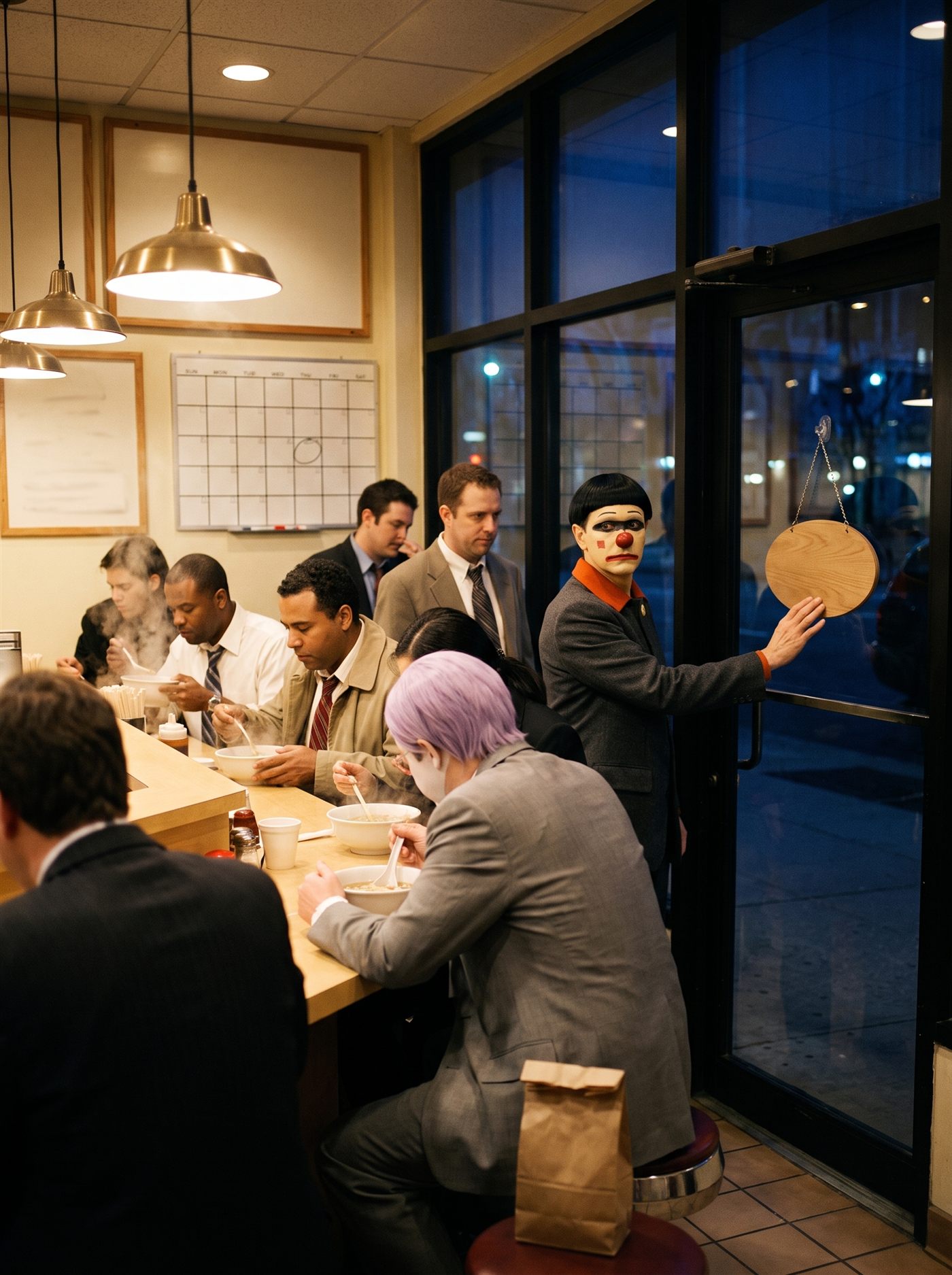
The sign turned while they ate
S&P 500 1,565.15 · +12.57 · +0.81% · the last full house
The room was full and warm and nobody heard the sign turn. At two o'clock the Federal Reserve released the minutes of its surprise half-point cut, and the reading was all comfort — unanimous, and willing to do more if needed — and the indexes rallied into the close: 1,565.15 on the S&P, 14,164.53 on the Dow, records both, with the week still making higher highs intraday even as the closes began to slip. The crack was already on this shelf: BNP froze its funds in August, two pages back, at the waterline. And the date. The bottom of the last bear was October 9, 2002, at 776.76 — five years to the calendar day, doubled almost exactly. The archive does not believe in omens. It records them.
The day's protagonist
The calendar — no symbol.
Move: October 9 → October 9 — bottom to top, five years, doubled almost exactly
The market's sense of ceremony is usually overstated by the people who write about it, and then a date like this happens. The great bear of the dot-com bust bottomed on October 9, 2002, at 776.76 — a page this archive has kept since its dried-kelp days. The great top before the financial crisis printed on October 9, 2007, at 1,565.15. Five years to the calendar day, and the arithmetic almost insolently clean: plus 101.50 percent, a doubling to within half a percent, trough to peak, October to October. The day's own mechanics were ordinary — Fed minutes at two, read as unanimity plus a willingness to cut again, a record close an hour and a half later — and the day's context was not: the crack in the credit had come in August, at the BNP waterline two pages back on this very shelf, and the machinery of the worst collapse since the thirties was already loading while the closes made records. From this square on the calendar the road ran 56.78 percent down to March 9, 2009 — the archive's armor-indigo bottom — and did not surface above this close until March 28, 2013. Five and a half years underwater, bought at the top of a five-year double, dated to the day. The archive does not believe in omens. It notes, in the ledger's smallest hand, that the calendar occasionally does.
The deeper account
The order of pages on this shelf is the page's own joke, told deadpan: the crack (BNP, August 9) comes BEFORE the top. The archive's 2008 wing has always begun at a waterline two months older than the peak the wing falls from; as of this page, the peak hangs where it belongs, after its own warning.
The week's shape deserves its sentence: the intraday records kept coming through Thursday — 1,576.09 on the eleventh — while the closes slipped. Tops end from the inside out; the last prints to believe are always the ones between the bells.
In the photograph of this day the room is as full as it has ever been, and the one who runs it is turning the sign while they eat. His face is the only one to the camera and it is, as always, unimpressed. The circled square on the calendar beside the door is doing the rest of the talking. The man with the bag doesn't look up. It is the last photograph of him with everything still fine, and he spends it eating noodles, head bowed, which the archive considers exactly right.
The ground is the night street's blue-black; the pigment is tungsten — the warm amber of the last full house before the coldest year on the shelf.
The artifact
The archive does not believe in omens, and then it has to file this: the previous bear bottomed on October 9, 2002, at 776.76 — a page this shelf has carried for years — and the next bull topped on October 9, 2007, at 1,565.15. The same square of the calendar, five years apart, with the index doubled between them to within half a percent. The day's own machinery was mundane — Fed minutes at two o'clock, read as comfort, a record by the bell — and the crack was already two months old at the BNP waterline two pages back. The counterman's line is what the room never noticed: the house closed full. From the circled square: minus 56.78 percent to March 2009, and no daylight above this close until the square's sixth spring, in 2013.
Read the leaf
Printed text is shown plain; the counterman's entries are shown in script.
OCTOBER 2007 — [a blank grid; the ninth square circled in pencil]
- this square, this year: 1,565.15 — the record.
- this same square, five octobers ago: 776.76 — the bottom.
- between them: +101.50 percent. doubled, almost exactly, to the day.
- COUNTERMAN'S HAND: the house closed full. the sign turned while they ate.
- THE SQUARE COMES AROUND AGAIN MARCH 28, 2013.
On Tuesday, October 9, 2007, the S&P 500 closed at a record 1,565.15 and the Dow at 14,164.53, lifted by the 2 p.m. release of the September FOMC minutes — five years to the calendar day after the October 9, 2002 bottom of 776.76, and 101.50 percent above it. The fall to March 9, 2009's 676.53 took 56.78 percent; the first close back above came March 28, 2013.
The ledger — what actually happened
| Measure | Close | Change | Marginalia |
|---|---|---|---|
| S&P 500 | 1,565.15 | +12.57 · +0.81% | the record close — the Global Financial Crisis measures down from here; per the official record |
| Dow Jones | 14,164.53 · +0.86% | its own record, the same afternoon | |
| The echo | Oct 9, 2002: 776.76 | the previous bear's bottom — the archive's page — five years earlier to the calendar day; +101.50% between them: doubled, almost exactly | |
| The driver | the minutes, 2 p.m. | September's surprise half-point cut, read back as unanimous and willing — the rally ran from the release to the bell | |
| The fall | −56.78% · Mar 9, 2009 | to 676.53 — the archive's bottom page; not surfaced above this close until March 28, 2013, five and a half years on |
Sources
- The market-data feed + the official daily record — both records, the 2002 bottom, the 2009 bottom, the 2013 recovery (the +101.50% computed from verified closes)
- Federal Reserve — the October 9, 2007 release of the September 18 FOMC minutes (verbatim, fetched)
- CNN/Money and wire coverage of the day (via excerpts — the sites decay; facts triple-corroborated, wording paraphrased): the minutes-driven afternoon rally
- The March 28, 2013 recovery close (1,569.19), headline-corroborated