An ordinary Thursday
S&P 500 1,453.09 · −44.40 · −2.96% · the first day of the crisis
The global financial crisis began on a day almost nobody experienced as the beginning of anything. A French bank couldn't price some paper; the pipes between the world's banks seized before New York had breakfast; and the American market registered a bad session — an overreaction, the strategists said at the close, in a market that had been due a setback. The index made a new all-time high two months later. The water never came back on.
The day's protagonist
The money market — no symbol.
Move: the pipes seized before New York woke
At the Paris morning BNP Paribas suspended three funds holding American asset-backed paper — about two billion euros — with a sentence later called the crisis's birth certificate: the complete evaporation of liquidity had made the assets impossible to value, regardless of their quality. If France's biggest bank couldn't price the paper, nobody could; and since every bank held some, banks stopped trusting one another's balance sheets by mid-morning. Overnight euro rates spiked; the ECB opened an unlimited window at four percent and forty-nine banks took €94.8 billion — more than after September 11. The Fed added twenty-four billion dollars. In New York it was a bad day and no more: down 2.96 percent, blamed on credit fears beside a quant-fund stumble and an insurance warning, talked down at the close as an overreaction. The LIBOR–OIS spread — the fever chart of the next two years — tripled that day and did not come back to earth. The freeze that began this morning ran, without a healthy week, into September 2008.
The deeper account
How ordinary it felt is the point. At the close, strategists called the day "a catalyst for a setback" in an oversold market and "an overreaction to the news and rumors." The VIX rose to 26 — elevated, not apocalyptic. Goldman fell 5.7 percent on quant-fund reports; AIG had warned that morning that delinquencies were spreading beyond subprime; it all filed under a rough patch.
The index made its actual all-time closing high — 1,565.15 — on October 9, two months AFTER this day. The market dated the crisis's beginning only in hindsight; the money market knew at once.
Northern Rock failed within five weeks of this morning. Its chief executive later gave the day its name: "the day the world changed."
The freeze never lifted: the interbank market stayed impaired from this Thursday continuously into the September 2008 collapse. What happened at Lehman thirteen months later arrived through pipes that had been dry since today.
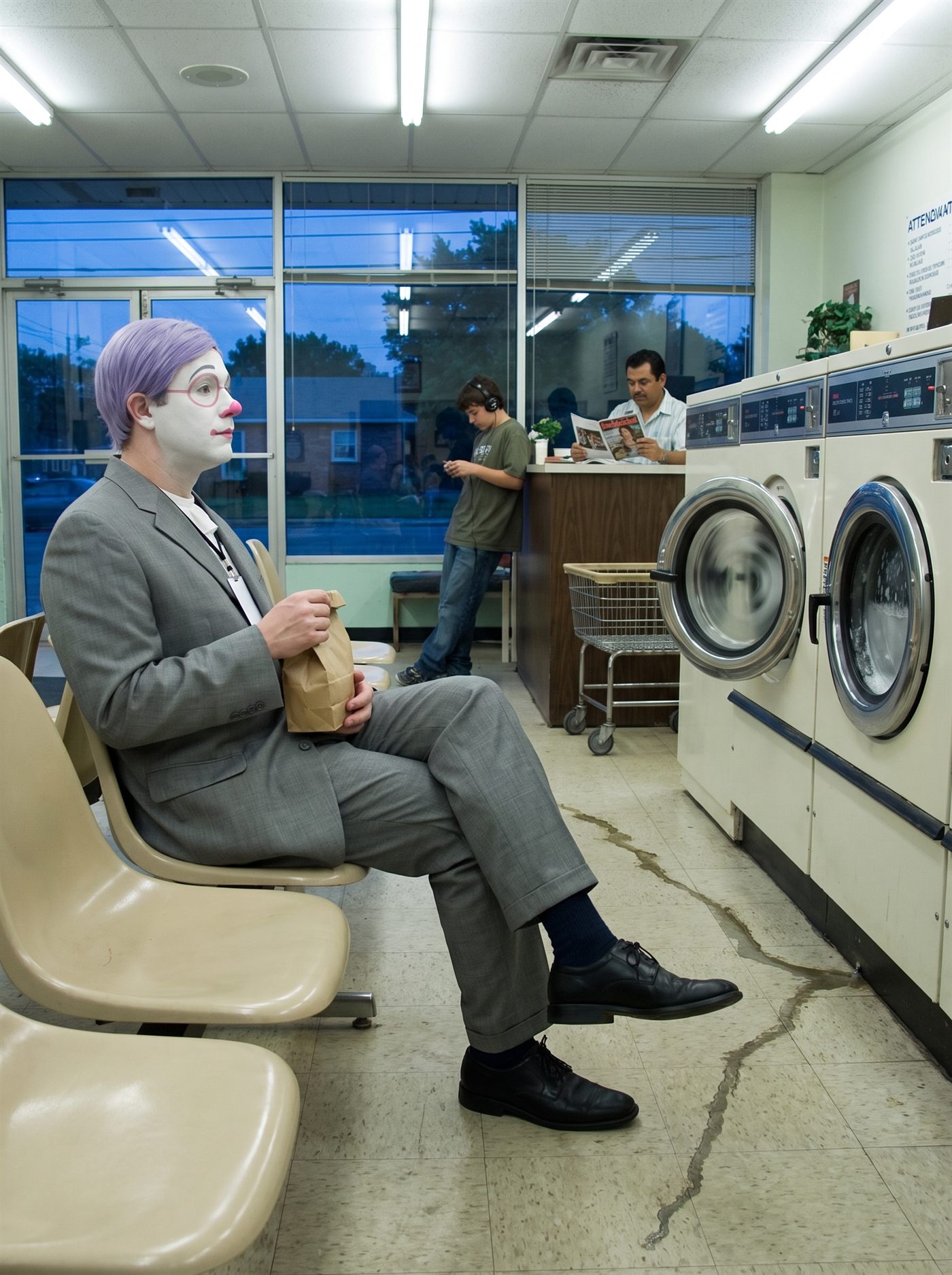
In the photograph of this day the protagonist waits out an ordinary errand, bag on his lap, his machine mid-spin — while at the back of the room one machine has stopped with the water still in it, and a thin dark line works across the floor toward everyone's laundry. Nobody has seen it yet. The reader has.
The ground is basin blue-grey; the pigment is the mineral pale of a dried waterline — the mark left where liquidity used to reach.
The artifact
The quoted sentence is exact, from the bank's own release that morning: three funds holding American asset-backed paper could no longer be valued — not because the assets were bad, but because the market for pricing them had evaporated. If France's biggest bank couldn't price the paper, nobody could; and since every bank held some, banks stopped trusting one another's balance sheets before New York had breakfast. The European Central Bank opened an unlimited window and forty-nine banks took ninety-five billion euros — more than after September 11. In New York it registered as a bad day and nothing more: the analysts at the close talked about oversold rebounds, and the index went on to its all-time high two months later. The money market never healed; five weeks on, a British bank failed; thirteen months on, the freeze that began this morning arrived everywhere at once.
Read the notice
Printed text is shown plain; the desk's entries are shown in script.
NOTICE TO HOLDERS · THURSDAY, AUGUST 9, 2007 · REDEMPTIONS: SUSPENDED — three funds · approximately €2.0 billion
- THE STATED REASON, EXACTLY: "the complete evaporation of liquidity in certain market segments of the US securitisation market has made it impossible to value certain assets fairly regardless of their quality or credit rating."
- frankfurt, mid-morning: €94.8 billion, overnight, to forty-nine banks — the first operation of its kind since 2001.
- new york, by the close: −2.96 percent. "an overreaction to the news and rumors" — a strategist, that afternoon.
- DESK HAND: the water didn't come back on. not this month. not next year.
- TWO MONTHS LATER THE INDEX MADE ITS ALL-TIME HIGH. THE MONEY MARKET NEVER DID.
On Thursday, August 9, 2007, BNP Paribas froze three funds it could no longer value, the interbank money market seized, and the ECB injected €94.8 billion overnight — the first day of what became the global financial crisis. The S&P 500 fell 2.96 percent to 1,453.09, a bad day and no more in real-time perception: it stood within 6.4 percent of July's record and went on to its actual all-time closing high, 1,565.15, on October 9 — two months after the tremor. Northern Rock failed within five weeks. Its chief executive later called this "the day the world changed."
The ledger — what actually happened
| Measure | Close | Change | Marginalia |
|---|---|---|---|
| S&P 500 | 1,453.09 | −44.40 · −2.96% | 1,497.49 → 1,453.09, closing on the session low — still within 6.4% of July's record close |
| Dow Jones | 13,270.68 | −387.18 · −2.83% | the second-worst day of 2007; twenty-nine of the thirty components fell |
| The trigger | ≈€2.0B frozen | three BNP funds suspended at the Paris morning — impossible to value, "regardless of their quality or credit rating" | |
| The plumbing | €94.8 billion | the ECB's unlimited overnight window, taken by 49 banks — the first operation of its kind since the aftermath of 9/11; the Fed added $24B | |
| The fever chart | 13 → 40 bp | the LIBOR–OIS spread, tripled in a day — it stayed sick for nearly two years |
Sources
- BNP Paribas — press release, August 9, 2007 (the verbatim sentence; the three funds) — https://group.bnpparibas/en/press-release/bnp-paribas-investment-partners-temporaly-suspends-calculation-net-asset-funds-parvest-dynamic-abs-bnp-paribas-abs-euribor-bnp-paribas-abs-eonia
- CNNMoney — market report, August 9, 2007 (the closes, the breadth, the strategists' quotes, the Fed's $24B)
- BIS, CGFS report 31 — central bank operations in the turmoil (the ECB's unlimited tender); ECB retrospectives
- Federal Reserve Bank of San Francisco — the August 2007 injections; the LIBOR–OIS record
- CBOE — VIX history (21.45 → 26.48)
- Daily closes: Yahoo ^GSPC and the house feed (including the July 19 and October 9, 2007 records)