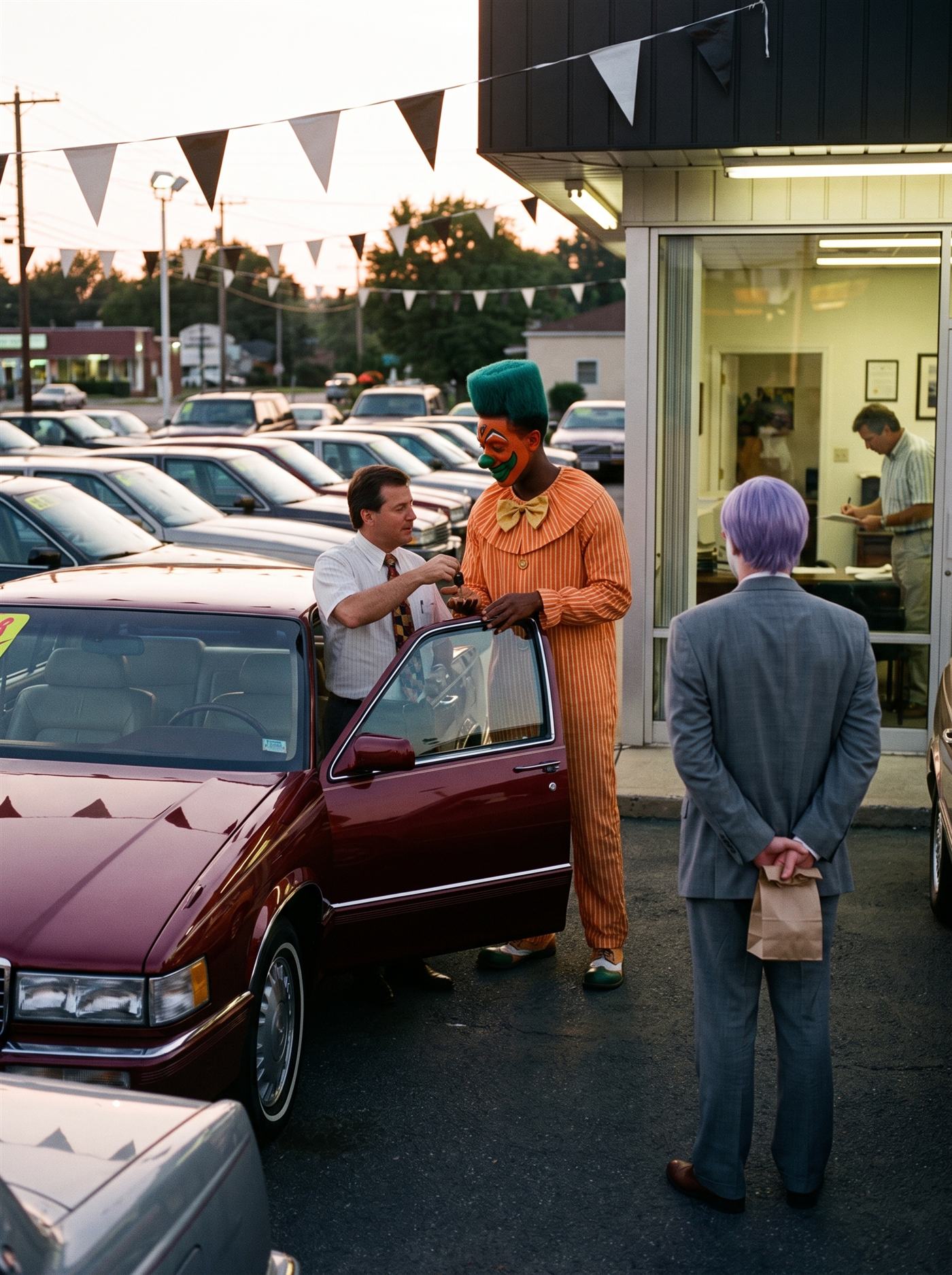
The shine at delivery
DOW JONES 2,722.42 · +25.35 · +0.94% · thirty-eight sessions out
Nothing about the day said last. Records had arrived all year — forty-four percent of gain in seven months, thirteen and change in January alone, two hundred fifty percent since the daybreak of 1982 that this archive keeps five pages back — and this Tuesday's was twenty-five quiet points, the dozens-th of its kind. The cash came in torrents out of the money funds. The stocks cost about twenty-one times their earnings, by the count nobody minded yet. And underneath the shine sat the machine no one had ever run at full speed: sixty to ninety billion dollars of pension money pledged to sell automatically into any fall. The fall was thirty-eight sessions out. The recovery, from that, took two years less a day.
The day's protagonist
The untested machine — no symbol.
Move: $60–90 billion of automatic selling, waiting for its first real day
Portfolio insurance was the era's most reassuring phrase: a program, not a prayer — when prices fell, the computers would sell index futures in measured steps, and the pension money underneath would be protected as if by an actual policy. By this Tuesday somewhere between sixty and ninety billion dollars — the SEC would later put the floor at fifty-five, mostly pensions — sat under such programs, every dollar of which was a standing order to sell into weakness. It had never been tested at scale, because scale is precisely what reassurance prevents until it doesn't. The top itself was 25.35 points of ordinary Tuesday: 2,722.42 on the Dow and 336.77 on the S&P, both indexes printing their exact pre-crash peaks together, the forty-fourth percent of the year's gain arriving as quietly as the first. Thirty-eight sessions later the machine met its first real day, and the archive's Black Monday page records what a theater sounds like when, in Andrew Grove's phrase, someone yells fire and the exits are also on fire. From this close to that one: minus 36.13 percent. From that one back to here: the archive's whole crash-week trilogy, the buyback wave, the one-sentence Fed — and finally August 24, 1989, at 2,734.64, two years less a day from the shine at delivery.
The deeper account
With this page the archive's 1987 becomes a complete five-act structure: the 1982 daybreak that started the bull, this top, Black Monday, the green shoot of the day after, and the landing of October 21. The crash pages have always cited 2,722.42; now the number has a Tuesday attached, with sunlight in it.
The valuation line is printed the way the era heard it: about twenty-one times earnings, a number that alarmed almost no one at the time and that Time only assembled into a warning two years later, looking back. Tops are retrospective constructions; the archive keeps the prospective view too, which contained mostly upholstery.
In the photograph of this day the keys change hands at golden hour and the buyer's hand is already on the roof — the bad friend at maximum charm, the machine at maximum shine. Behind him, next in line at the office door, waits the one who always followed. The office window has another signature in progress. Everyone in the frame is getting exactly what they came for.
The ground is dusk-dark; the pigment is lacquer — the deep burgundy-gold of a finish inspected in the last good light.
The artifact
Every top is a delivery: something shining, handed over at the best light of the day, with the paperwork's most important line printed smallest. Here the small line is the undercoating — sixty to ninety billion dollars of portfolio insurance sold with vehicles like this one, a product whose entire premise was that it would work when everyone used it at once, and which had never been tested in rain. The odometer read 2,722.42; the S&P printed its own record the same afternoon; the year stood 44 percent up with torrents of cash still arriving. Thirty-eight sessions later came the storm the archive already keeps in full — Black Monday, the shoot through the ash, the landing — and the trade-in value was not restored until August 24, 1989. Two years, less a day.
Read the slip
Printed text is shown plain; the salesman's entries are shown in script.
DELIVERY SLIP · AUGUST 25, 1987 — congratulations on your purchase.
- delivered: one (1) sedan, fully loaded. odometer at delivery: 2,722. terms: margin, gladly.
- undercoating: portfolio insurance — sixty to ninety billion sold with vehicles like yours. never yet tested in rain.
- this year: up 43.59 percent. about 21 times earnings, by the count nobody minded yet. the S&P at its own record the same afternoon: 336.77.
- SALESMAN'S HAND: he took the keys at the very top. drove it thirty-eight sessions.
- TRADE-IN VALUE RESTORED AUGUST 24, 1989 — TWO YEARS, LESS A DAY.
On Tuesday, August 25, 1987, the Dow closed at 2,722.42 and the S&P 500 at 336.77 — both indexes' exact pre-crash peaks, printed together. Thirty-eight sessions later the Dow closed at 1,738.74, down 36.13 percent, on the Black Monday this archive keeps; the first close above the peak came August 24, 1989.
The ledger — what actually happened
| Measure | Close | Change | Marginalia |
|---|---|---|---|
| Dow Jones | 2,722.42 | +25.35 · +0.94% | the all-time high — not closed above until August 24, 1989, two years less a day; per the daily record |
| S&P 500 | 336.77 · +1.03% | the S&P's exact pre-crash peak, printed the same day; per the official series | |
| The melt-up | +43.59% YTD | 13.82 of it in January alone; +250.4% from the August 1982 low — the archive's daybreak page | |
| The machine | $60–90B | under portfolio insurance — the SEC's later floor: at least $55B, mostly pensions; untested at scale until the thirty-ninth session | |
| The fall | −36.13% · 38 sessions | to 1,738.74 — Black Monday, the archive's page; staged by the −4.60% triple-witching Friday before it |
Sources
- MeasuringWorth — Daily Closing Values of the Dow Jones Average (the peak, the YTD endpoints, the 1982 low, the crash staging, the Aug 24, 1989 recovery — queried directly) — https://www.measuringworth.com/datasets/DJA/
- Federal Reserve History, "Stock Market Crash of 1987" — the +44%-in-seven-months line, the portfolio-insurance role, the Grove quote (fetched in full)
- SEC (chairman's speech, July 1988) — the ≥$55B portfolio-insurance floor on Oct 19; Time (Aug 21, 1989) — the ~21× retrospective and the torrents-of-cash line
- The official S&P daily series — 336.77, the matching S&P peak