Vertigo
S&P 500 224.84 · −57.86 · −20.47%
The discovery that the floor is a consensus, and consensus can leave. A fifth of everything, gone between one bell and the next.
The day's protagonist
Portfolio insurance — no symbol.
Move: S&P 500 futures fell ~29% in Chicago — further than stocks themselves
A hedging strategy that sold futures automatically as prices fell meant every decline generated more selling. The machines did not malfunction — they did exactly what they were told, all at once, and the doom loop they created is why circuit breakers exist today.
The deeper account
The fuse: a five-year bull market up ~44% year-to-date at its August peak; the prior week was already the worst in years (Dow −9.5%, including −108.35 that Friday).
The weekend: Treasury Secretary Baker publicly threatened to let the dollar fall. Mid-October: Iranian missile attacks on tankers in the Gulf.
It began west of the dateline — Hong Kong fell 11.1% before New York woke; London was down ~11% by breakfast.
Many NYSE stocks could not open for over an hour: sellers, and no bids. The tape ran two hours late; nobody knew the true price of anything.
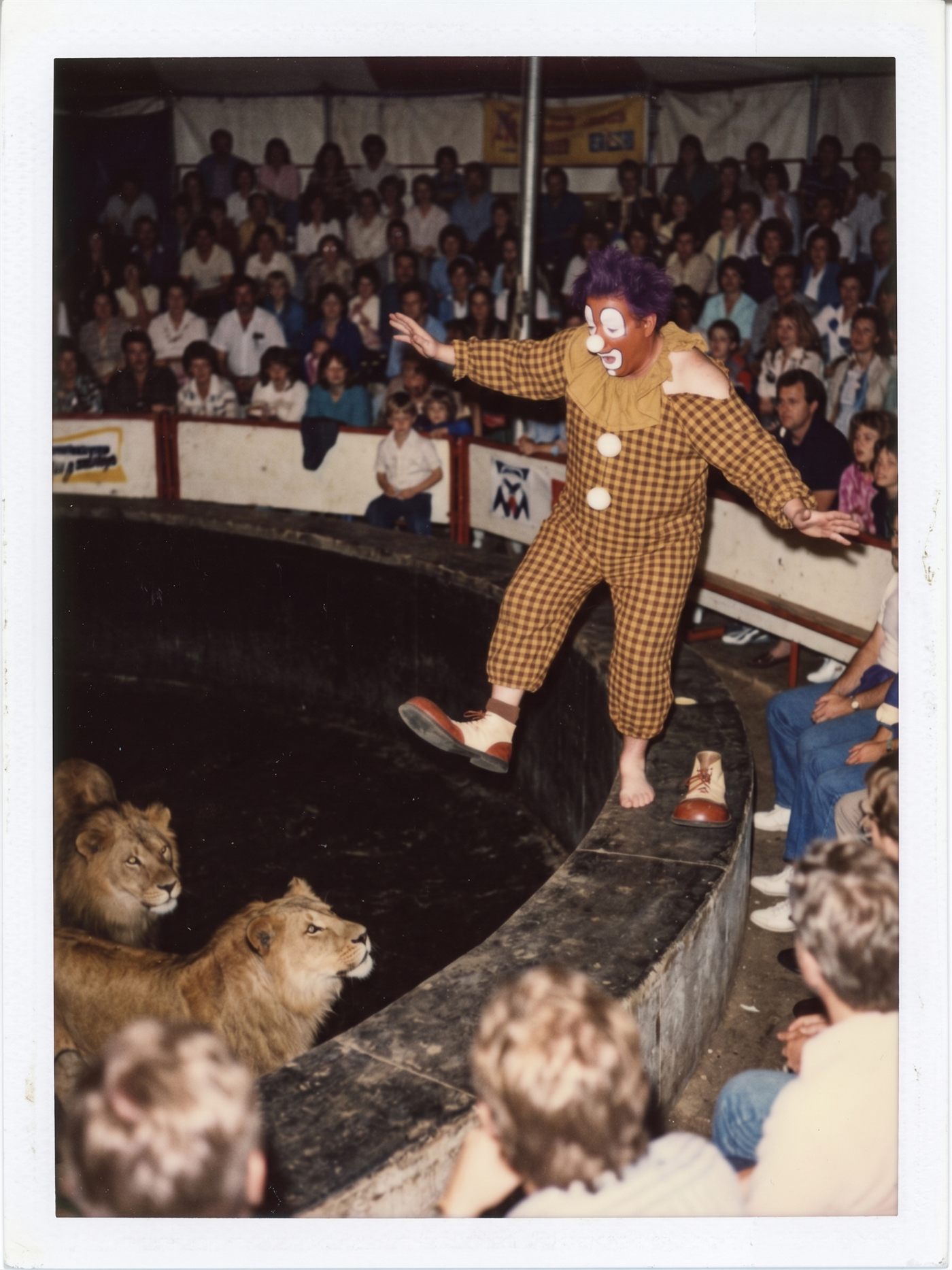
The photograph of this day is Tumbles', not his: the stumble at the pit rim, the crowd not yet understanding what it watches. He is in this book's later pages as the man who was always in the crowd — the same man since 1929 — and on this day the crowd was everyone.
The morning after, the Fed released one sentence — thirty words affirming its "readiness to serve as a source of liquidity." No money moved. It was enough. The year closed higher than it began.
Circuit breakers — mandatory trading halts — were invented because of this day.
The artifact
The report carries no stamp — the house does not decorate grief, and this is the deepest grief in the register. Its finding is the day's entire discovery, and the ringmaster's last line is the photograph: the stumble at the pit rim, watched by a crowd that had not yet understood. The machines, for the record, did not malfunction. They did exactly what they were told, all at once, and the safety hardware on this book's 1997 and 2020 pages exists because of this one.
Read the report
Printed text is shown plain; the ringmaster's entries are shown in script.
MONDAY, OCT 19 · AFTER THE LAST BELL · RINGMASTER'S REPORT
- weather: arrived from the west, having already flooded every other city.
- house: full — 604,300,000, double the old record.
- the acts: could not begin for over an hour. SELLERS, AND NO BIDS. the tape ran two hours behind the ring.
- lost between the bells: one fifth of everything.
- FINDING: the floor is a consensus. the consensus left.
- RINGMASTER'S HAND: the funny man reached the pit rim mid-act. the crowd has not yet understood what it watched.
On Monday, October 19, 1987 — Black Monday — the S&P 500 fell 20.47 percent to 224.84 and the Dow fell 508 points, 22.61 percent, the largest one-day percentage drop in history, still unbeaten. Hong Kong had fallen 11.1 percent overnight and London was down 11 percent by New York's breakfast; NYSE volume of 604.3 million shares roughly doubled the prior record, and portfolio insurance's automatic selling drove S&P futures down about 29 percent in Chicago. Circuit breakers were invented because of this day.
The ledger — what actually happened
| Measure | Close | Change | Marginalia |
|---|---|---|---|
| Dow Jones | 1,738.74 | −508.00 · −22.61% | largest one-day % drop in history, still unbeaten |
| S&P 500 | 224.84 | −57.86 · −20.47% | from 282.70 |
| NYSE volume | 604.3M shares | roughly double the previous record | |
| Hong Kong (overnight) | the crash arrived in New York like weather that had already flooded every other city |
Sources
- Federal Reserve History — Stock Market Crash of 1987 — https://www.federalreservehistory.org/essays/stock-market-crash-of-1987
- Report of the Presidential Task Force on Market Mechanisms (the Brady Commission), January 1988
- The New York Times, October 20, 1987 — front page: "Stocks Plunge 508 Points, a Drop of 22.6%"