Wrong twice
S&P 500 2,163.26 · +23.70 · +1.11%
Once about the outcome, once about what the outcome meant — both inside twelve hours, both before the opening bell.
The day's protagonist
The overnight — no symbol.
Move: S&P futures locked limit-down at −5% near 1 a.m.; the cash market opened as if it never happened
As the returns defied the polls, the S&P futures fell five percent and froze against their overnight limit; Dow futures were down nearly nine hundred points, and everyone narrating the decline predicted years more of it. Then, without a headline to explain itself, the market changed its mind: by dawn the fall had halved, by the open it was gone, by the close the Dow was up 257, and by the next afternoon it printed an all-time high. Wrong about the outcome, then wrong about what the outcome meant — twice in twelve hours, all of it before the bell. The day session, which is all the record books keep, shows a pleasant Wednesday. The night lives only in the futures tape.
The deeper account
This page and Brexit are the wing's overnight pair, five months apart: the same shock shape, opposite endings. The market learned the pattern mid-decade and started fading it by morning.
The limit-down halt — a rule descended from 1987 via the Flash Crash reforms — did exactly its job: froze the panic until the panic changed its mind.
The commentary of 1 a.m. is preserved in amber: confident, unanimous, and unwound by lunch. The era's recurring footnote — the price of certainty, again.
Nothing in this book argues politics; the page records a mechanism. Whatever the night meant elsewhere, on the tape it meant this: the market repriced the same fact twice and kept the second answer.
The day bar is the wing's second invisible event, after the phosphene. The Strange Decade's strangest habit: its biggest moves kept happening off the page.
The artifact
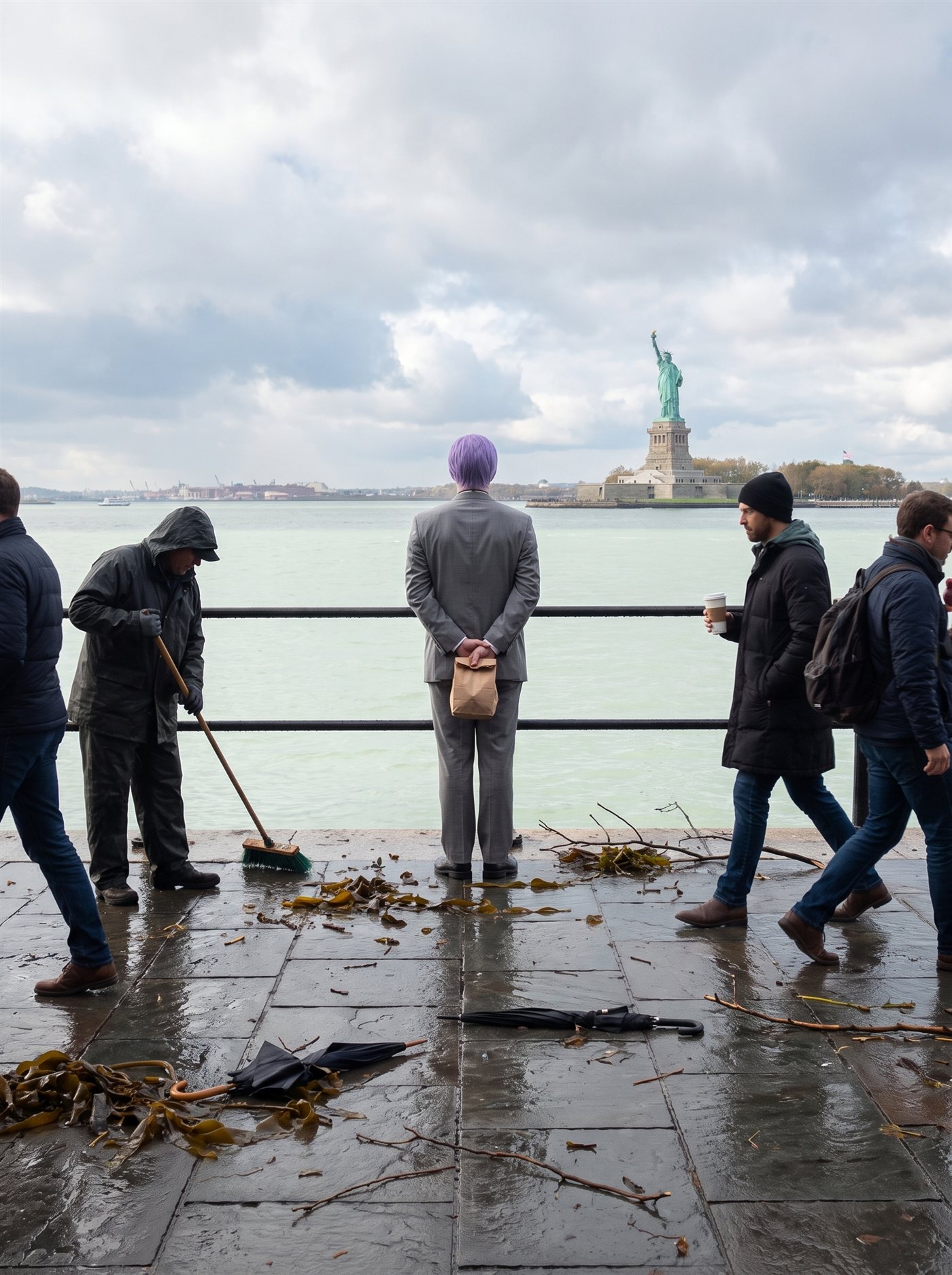
The record books keep the day session, and the day session was a pleasant Wednesday. The storm — five percent, frozen against the overnight limit, narrated with total confidence at one in the morning — exists only in logs like this one. By the open it had never happened. The watchman's last entry looks across the water at the one thing that behaved as predicted.
Read the night log
Printed text is shown plain; handwritten entries are shown in script.
SEAWALL STATION · NOV 8 – 9 · NIGHT WATCH
- 1:07 a.m. — storm at its worst. down five, frozen at the limit. the narrators: years more of this.
- 4:12 a.m. — half of it gone. no headline to explain why.
- 6:30 a.m. — sea calm. fall gone.
- morning — swept. a pleasant wednesday, by the day sheet.
- THE MONUMENT: same color as always.
- NO DAMAGE FOUND WRONG TWICE BEFORE THE BELL · THE NIGHT LIVES ONLY IN THIS LOG
S&P futures locked limit-down at minus five percent near 1 a.m. as the returns defied the polls; Dow futures were down nearly nine hundred at the worst. By the open the fall was gone; the S&P 500 closed up 1.11 percent at 2,163.26, the Dow rose 256.95, and the next afternoon printed an all-time high — one of the fastest full repricings on record, all of it before the bell.
The ledger — what actually happened
| Measure | Close | Change | Marginalia |
|---|---|---|---|
| S&P 500 | 2,163.26 | +23.70 · +1.11% | a pleasant Wednesday, by the day bar; the crash happened where day bars don't reach |
| Dow Jones | 18,589.69 | +256.95 · +1.40% | an all-time high followed within a day |
| The overnight | −5%, halted | S&P futures locked limit-down near 1 a.m. as the returns came in | |
| The swing | ≈ 6% in hours | limit-down to a green close — one of the fastest full repricings on record |
Sources
- CNNMoney — Wall Street welcomes Trump with a bang: Dow soars 257 points — https://money.cnn.com/2016/11/09/investing/dow-jones-trump-wins-election/index.html
- NBC News — Dow futures plunge 600 points on election night jitters — https://www.nbcnews.com/storyline/2016-election-day/dow-futures-plunge-600-points-election-night-jitters-n680766
- CME Group — Lessons From the 2016 Election Market Response — https://www.cmegroup.com/openmarkets/finance/2020/Lessons-from-the-2016-election-market-response.html
- Public record — S&P futures −5% limit down overnight; Dow futures −900 at the worst; Dow record close November 10