The thrown switch
S&P 500 2,746.56 · −225.81 · −7.60%
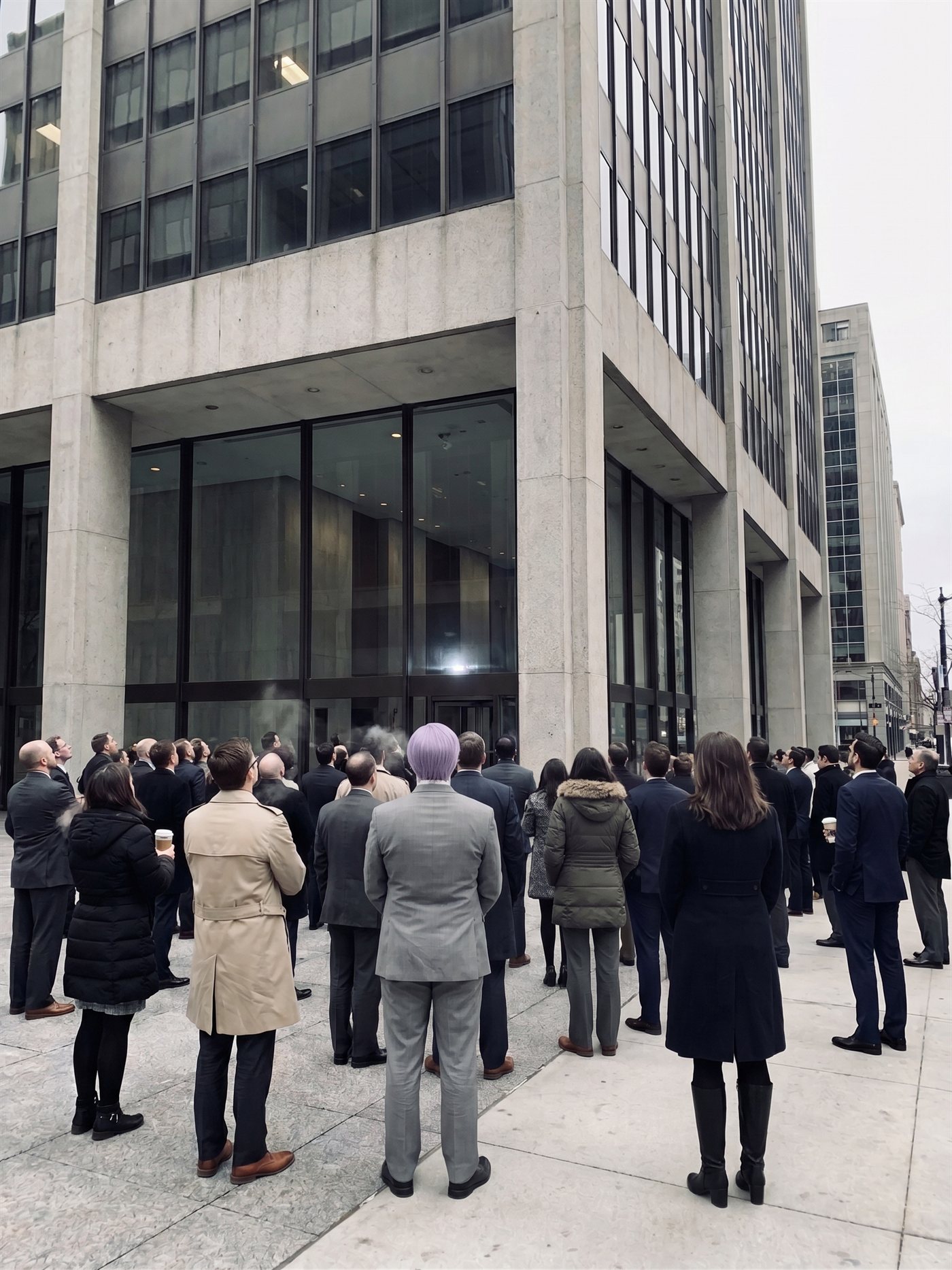
Four minutes after the bell, a mechanism installed after 1987 and used once since stopped every stock in the country for fifteen minutes. It worked perfectly. The falling resumed on schedule.
The day's protagonist
The switch — no symbol.
Move: 9:34 a.m. — every stock in the country halted for fifteen minutes, the first market-wide breaker since 1997
The futures were limit-down before dawn. Four minutes after the opening bell the index was through minus seven percent, and the market-wide circuit breaker fired — the mechanism written into the rules after Black Monday 1987, used exactly once since, on a page this book already keeps: October 27, 1997. Fifteen minutes of nothing. Then the market reopened, orderly, and went on falling in an orderly fashion to close down 7.6%, its worst day since 2008. Beneath the equity tape, two firsts: Saudi Arabia opened a price war on Russian oil and crude had its worst day since the Gulf War, while the entire American yield curve — one month to thirty years — fell below one percent for the first time in history. The machinery held. The world it was measuring did not.
The deeper account
Retail was one week into the job. The locked door of March 2 had finally opened — and the first thing the market did with him inside was stop.
The breakers fired four times in ten days — March 9, 12, 16 and 18 — after twenty-three years of silence. Two of those days are pages in this wing.
The 1997 page in this book describes the first firing of these breakers as a curiosity of market plumbing. This page is the same plumbing, tested by weather it was never designed for, and passing.
What the halt bought was not a floor but order: the market fell the same distance it was always going to fall, without the 2010-style vacuum three wings back. That is what the mechanism is for.
The oil war and the pandemic arrived on the same morning by coincidence. Two months later crude settled below zero — the page for that day is already in this encyclopedia.
A yield curve entirely below one percent means the bond market had priced years of nothing. It was right about the years and wrong about the nothing.
The artifact
The log keeps the day in the building's own grammar: a mechanism installed after 1987, used once in twenty-three years — on a page this book already keeps — and then needed at 9:34 on a Monday morning. Fifteen minutes of nothing, every floor in good order, and then the falling resumed on schedule. The machinery held. The world it was measuring did not.
Read the drill log
Printed text is shown plain; handwritten entries are shown in script.
BUILDING SAFETY OFFICE · MARCH 9 · FIRE DRILL LOG
- the system — installed 1988. sounded in earnest once: october 27, 1997.
- the alarm — 9:34 a.m. — four minutes in. cause: nothing on the premises.
- the drill — every floor cleared in good order. fifteen minutes of nothing.
- re-entry — 9:49 a.m. — the falling resumed on schedule.
- CONDITION: the weather, not the wiring.
- MECHANISM HELD THE ALARM WOULD SOUND THREE MORE TIMES IN TEN DAYS · NO FIRE WAS EVER FOUND
The Level 1 market-wide circuit breaker fired at 9:34 a.m. — the first since October 27, 1997 — and trading resumed at 9:49. The S&P 500 closed down 7.60 percent at 2,746.56, the worst day since December 2008; the breakers fired again on March 12, 16, and 18. Beneath the equity tape, the entire Treasury curve sat below one percent for the first time in history, and crude had its worst day since the Gulf War.
The ledger — what actually happened
| Measure | Close | Change | Marginalia |
|---|---|---|---|
| S&P 500 | 2,746.56 | −225.81 · −7.60% | the worst day since December 2008; the opening gap was the best price of the session |
| The halt | 9:34 → 9:49 a.m. | Level 1 circuit breaker — the first since October 27, 1997, a page in this book | |
| 10-year Treasury | 0.318% | an all-time low; the whole curve, one month to thirty years, under 1% for the first time ever | |
| Oil (WTI) | ≈ −25% | Saudi Arabia declared a price war on Russia; crude's worst day since the 1991 Gulf War | |
| VIX | 54.46 intraday | the highest since 2008 — and not yet halfway to where this month would take it |
Sources
- CNBC — Circuit breakers, triggered for the first time in 20 years, pass a crucial test — https://www.cnbc.com/2020/03/09/circuit-breakers-triggered-for-the-first-time-in-20-years-pass-a-crucial-test.html
- CNBC — 10-year Treasury yield hits new all-time low of 0.318% — https://www.cnbc.com/2020/03/09/10-year-treasury-yield-plunges.html
- Wikipedia — 2020 Russia–Saudi Arabia oil price war — https://en.wikipedia.org/wiki/2020_Russia%E2%80%93Saudi_Arabia_oil_price_war
- Al Jazeera — Stocks nosedive on oil price war and coronavirus fears — https://www.aljazeera.com/economy/2020/3/9/look-out-stocks-nosedive-on-oil-price-war-and-coronavirus-fears