The repair
S&P 500 7,509.20 · +65.92 · +0.89%
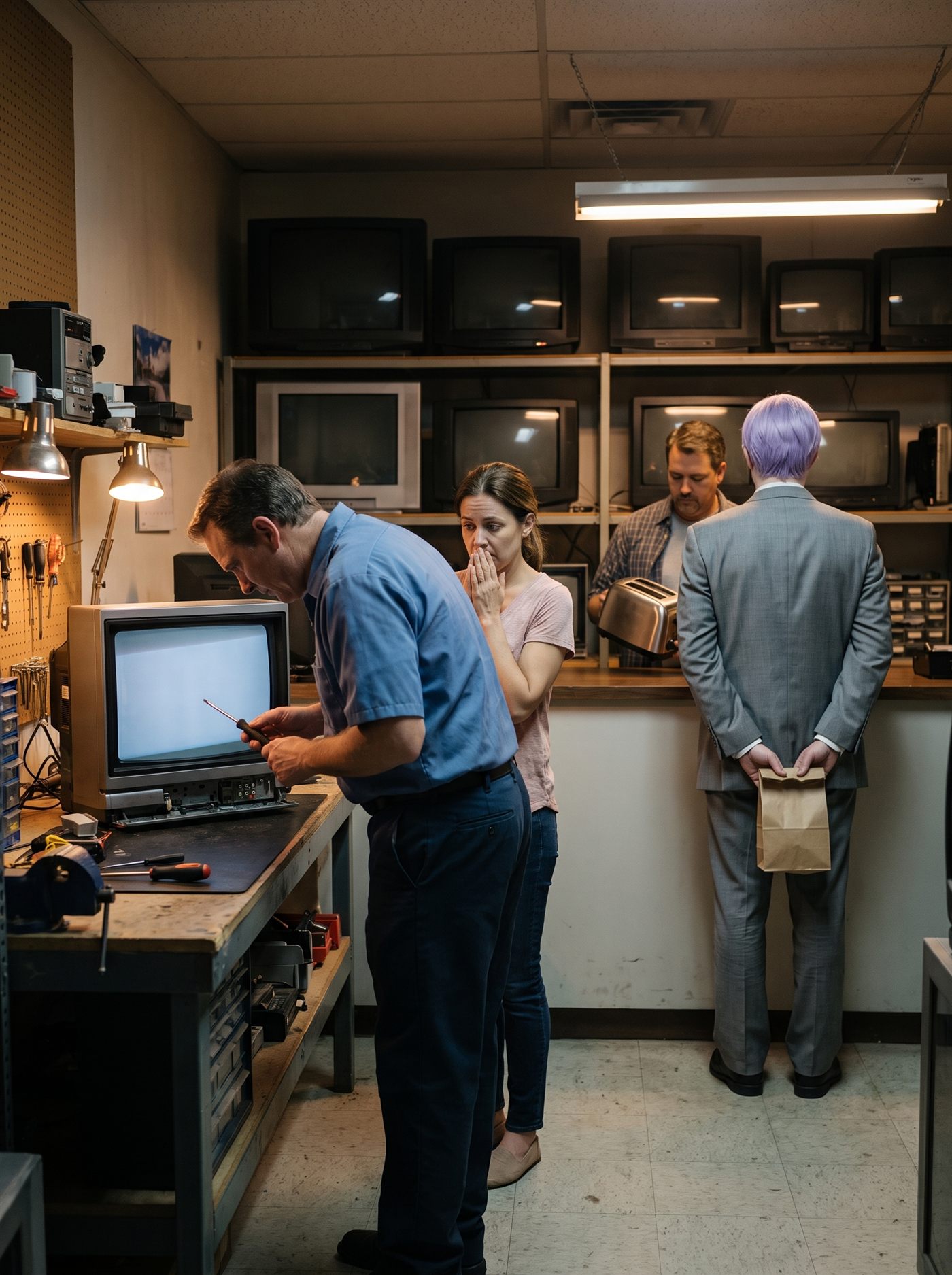
Sandisk rose 14.27 percent. Western Digital rose 12.51. Micron rose 12.17, Intel 8.64, AMD 8.11, Applied Materials 7.39, Marvell 6.68, and the semiconductor ETF 5.45. The technology sector gained 2.89 percent and the S&P 500 rose 65.92 points to 7,509.20. There was no economic data released on this session at all. There were no earnings verdicts that touched any of it. The group that had been the most brutalised in the market for three weeks simply came back, by an average of about ten percent, on a Tuesday, for no reason that the record preserves. The index's own path was the calmest in the batch — a dip in the first twenty minutes, a steady climb to 7,515.31 at ten to one, and then four hours inside a nine-point band, doing nothing at all. Every mega-cap that had been holding the market up went down: Microsoft 1.13 percent, Alphabet 1.38, Amazon 0.98, Meta 0.32. It worked. On this afternoon the thing came back on and everybody in the room saw it happen.
The day's protagonist
Sandisk SNDK
Move: +14.27% to 1,589.40 — the largest single-day gain of the batch to this point, in the most violent instrument in the market
Sandisk opened at 1,511.67 and closed at 1,589.40, up 14.27 percent, having been as high as 1,595.64. It is the most extreme instrument in this entire batch and its July is worth stating in full, because it is what the month did to anything without ballast: it began July at 2,273.73, fell 14.13 percent on the second, 12.63 percent on the thirteenth, and 3.99 on the seventeenth; rose 14.27 percent on this Tuesday; fell 7.32 percent on the day of the Federal Reserve decision to close at 1,015.89; rose 25.99 percent the following morning; fell 5.09 percent on the last day of the month; and finished July at 1,214.83, down 46.57 percent. Nearly half the company, in twenty-two sessions, in a month the index closed 0.13 percent lower. On the twenty-first of July it had the best day it would have all month until the thirtieth, and there is no explanation for it in the record — no data, no guidance, no policy. Sometimes a market that has sold something for three weeks runs out of people who want to sell it, and the price goes up fourteen percent to find out who is left.
The deeper account
Nothing happened. That is the finding, and it takes some discipline to write it down rather than reaching for a reason. There was no economic release on the twenty-first of July. There were no results from any of the companies that moved. A fifty percent tariff on a wide range of Canadian imports was announced and had no visible effect on anything here. And the most beaten-down group in the market — memory, storage, semiconductor equipment, the whole apparatus of the thing everyone had spent three weeks deciding they had overpaid for — rose by an average of about ten percent between half past nine and four o'clock.
The index's own behaviour was almost demure by comparison. It opened at 7,489.95, made its low of 7,467.86 in the first twenty minutes, climbed steadily until about one, and then stopped: the last four hours of the session sit inside a nine-point band between 7,506 and 7,515. The whole day's range was 47.45 points, the narrowest of the nine days in this batch. A market that had genuinely changed its mind about something would have kept going. This one made its point by one o'clock and then waited for the bell.
The other half of the session is the half that matters for the month. While the wreckage was up ten percent, Microsoft fell 1.13 percent, Alphabet 1.38, Amazon 0.98, Meta 0.32, and Intercontinental Exchange — which would be the second-best performer in the entire market in July — fell 2.05. This is the same mechanism as the second of July running backwards. Money did not arrive; money moved, out of the handful of names that had been holding the index up and into the several dozen that had been dragging it down, and the S&P 500 registered the difference as a rise of eight tenths of a percent.
Two sessions later, on the twenty-third, Tesla and Alphabet reported and the index closed at 7,408.30 — a hundred points below this. By the twenty-ninth it was at 7,316.15. The whole of this Tuesday, and a good deal more, was gone inside a week. The archive knows that and says it here at the end, once, because it is an encyclopedia and knows the ending. It does not put it on the photograph and it does not put it on the artifact, and the page carries no stamp, on the same rule it applied at 676.53 in 2009 and at the bottom in March. On the afternoon itself, an old set that had been dead for three weeks came back on in a back room, and the honest description of that is: it worked.
The artifact
The ledger — what actually happened
| Measure | Close | Change | Marginalia |
|---|---|---|---|
| S&P 500 | 7,509.20 | +65.92 · +0.89% | high 7,515.31 at 12:50, low 7,467.86 at 9:40 · a range of 47.45 points, the narrowest session of the batch · after one o'clock it spent four hours inside a nine-point band |
| Sandisk | 1,589.40 | +14.27% | Western Digital +12.51% to 548.39, Micron +12.17% to 970.82, Intel +8.64% to 105.45, AMD +8.11%, Applied Materials +7.39%, Marvell +6.68% |
| Semiconductors | +5.45% | the SOXX ETF; the PHLX Semiconductor index rose 5.2 percent. Technology was the best sector at +2.89%, more than twice the next one — energy at +0.97% | |
| Economic data | none | there was no economic release on this session. The largest one-day move in the market's most damaged group for three weeks happened on a day with an empty calendar | |
| Dow Jones Industrial Average | 52,224.64 | +385.38 | up 0.7 percent; the Nasdaq Composite rose 329.13 to 25,837.21, up 1.3 percent. Advancers led 1.44 to one on the New York Stock Exchange and 1.65 to one on the Nasdaq |
| The mega-caps | lower | Intercontinental Exchange −2.05%, Alphabet −1.38%, Microsoft −1.13%, Amazon −0.98%, Meta −0.32%. The names carrying the index in July sat this one out | |
| VIX | 17.05 | −8.58% | down more than eight percent, on volume of 16.14 billion shares against a twenty-session average of 19.56 billion. Fifty percent tariffs on a wide range of Canadian imports were announced the same day and moved nothing here |
| Two sessions later | 7,408.30 | on 23 July, after Tesla and Alphabet reported. The whole of this Tuesday, and more, was gone by Thursday afternoon |
Sources
- Robinhood market-data feed — SPX 10-minute bars and day bar; VIX day bar; day bars with adjustment none for SNDK, WDC, MU, INTC, AMD, AMAT, MRVL, SOXX, CAT, TSLA, NVDA, ICE, GOOGL, MSFT, AMZN, META and the ten sector SPDRs. All percentages on this page are computed from those closes. Pulled 2026-08-28
- Zacks via Yahoo Finance — "Stock Market News for July 22, 2026" (covers the 21 July session: index closes, the PHLX Semiconductor move, sector ETFs, Western Digital and Intel, the VIX, breadth, volume, the absence of any economic release, and the Canadian tariff announcement) — https://finance.yahoo.com/markets/stocks/articles/stock-market-news-july-22-131800656.html