Over the top
Dow Jones 382.74 · +3.27 · +0.86% · over the top
For twenty-five years, two months and twenty days, 381.17 was the most famous number on Wall Street — the close of the last day of the old world. On a gentle Tuesday before Thanksgiving, a five-week surge carried the industrials past it at last, on record breadth, in crowded brokers' offices. The skeptics picked the milestone apart the same afternoon, and the market listened politely and kept climbing. The bell had waited a quarter century; it rang once, quietly, and never needed to ring again.
The day's protagonist
The ghost of 1929 — no symbol.
Move: 381.17, finally passed — by 1.57
The crossing came gently: up 3.27 on record breadth — 1,271 issues trading — at the crest of a five-week post-election surge, in brokers' offices the Tribune described as crowded with people convinced stocks were going higher. The press marked the milestone and immediately produced the asterisks: only seventeen of 1929's thirty companies were still in the average; with the modern list, one broker noted, the old index would have been forty percent over the top already; the rails and utilities were still far below their own 1929 peaks. And the reassurance ran the other way — fifty percent margin against 1929's ten, real postwar earnings underneath, and dividends that had quietly made patient investors whole years before the price index healed. The market accepted all footnotes and kept climbing: 521 by April 1956, and never a close below the old number again.
The deeper account
The climb's last leg was political: a five-week post-election surge had added 33.83 points. The structure underneath was nothing like 1929's — fifty percent margin against ten, and earnings instead of leverage.
By other yardsticks the milestone had already happened or hadn't yet: the S&P's value-weighted predecessor had crossed its own 1929 peak the previous spring, while the rails sat sixty points and the utilities eighty below theirs. TIME's man on the Street shrugged the line of the week: "The Dow is back to 1929, but I don't know whether the market is."
With dividends reinvested — and 1930s deflation counted — the patient were made whole many years before this day; the price index was the last thing to heal, and the only one anyone watched.
The other end of this round trip keeps its own page in the archive: July 8, 1932, when the same index closed at 41.22 and nobody came. From that bench to this bell: twenty-two years.
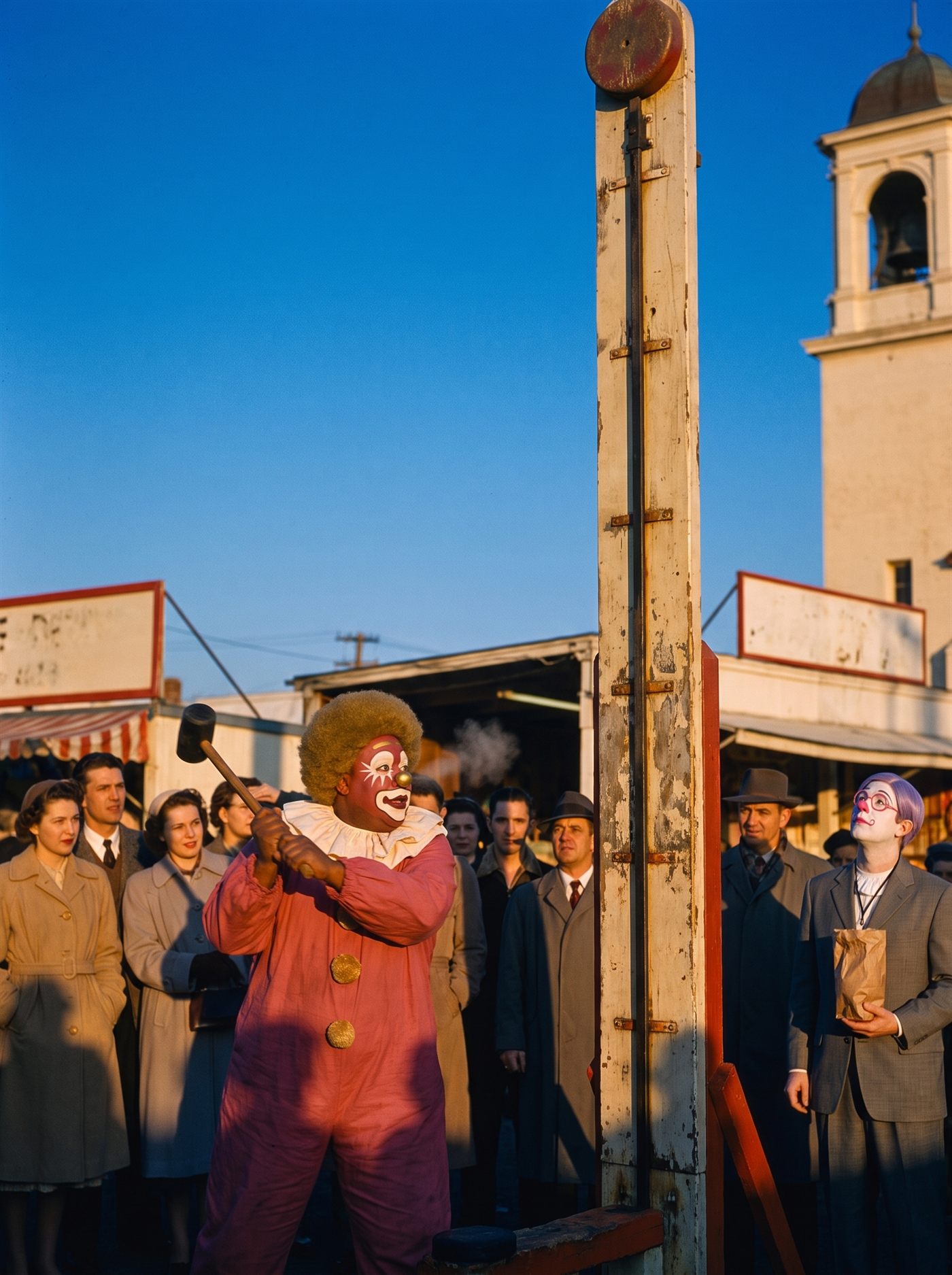
In the photograph of this day the mallet is at the top of its arc and the bell has waited twenty-five years — and the protagonist watches from just outside the celebration's frame, holding his bag, glowing anyway. His hero is about to ring it.
The ground is grey flannel; the pigment is struck gold — the loud register, earned by a quarter century of waiting.
The artifact
Every number on the placard is the day's own. The bell last rang September 3, 1929, at 381.17 — the most famous number on Wall Street for a quarter century — and on this gentle Tuesday a five-week post-election surge carried the industrials over it at 382.74, with 1,271 separate issues trading, a record for breadth. The overheard line is real, from TIME's man on the Street that week; so is the asterisk — only seventeen of 1929's thirty companies were still in the average, and by other yardsticks the milestone had either already happened or hadn't yet. The market took the note and kept climbing anyway: it never closed under 381.17 again.
Read the placard
Painted text is shown plain; what was overheard is shown in script.
HIGH STRIKER · TUESDAY, NOVEMBER 23, 1954 · TEST YOUR STRENGTH — ring the bell
- the bell last rang: september 3, 1929 · at 381.17
- today: 382.74 — over the top by 1.57. the wait: twenty-five years, two months, twenty days — the longest between bells in the record.
- issues moving today: 1,271 — a record for breadth. margin now: fifty percent. margin then: ten.
- OVERHEARD AT THE RAIL: the dow is back to 1929 — but I don't know whether the market is.
- ONLY SEVENTEEN OF THE THIRTY WHO STARTED THE CLIMB WERE STILL ON THE ROPE.
On Tuesday, November 23, 1954, the Dow closed at 382.74 — its first close above the September 3, 1929 peak of 381.17, twenty-five years, two months and twenty days later, still the longest stretch between all-time highs in the index's history. The crossing came on record breadth in a four-session Thanksgiving week and was picked apart in real time: only 17 of 1929's 30 companies remained in the average, and with dividends reinvested patient investors had been made whole years earlier. The index never closed below the old peak again.
The ledger — what actually happened
| Measure | Close | Change | Marginalia |
|---|---|---|---|
| Dow Jones | 382.74 | +3.27 · +0.86% | the first close above 381.17 — September 3, 1929 — since the day itself; per the daily record |
| The wait | 25y 2m 20d | the longest stretch between all-time highs in the index's history | |
| Breadth | 1,271 issues | an exchange record for the day — the whole list moved (the New York Times) | |
| The asterisk | 17 of 30 | companies of 1929 still in the average — with today's list, "the index would now be 40% over the top" (Hemphill, Noyes & Co., in the Times) | |
| The week | 387.79 by Friday | a four-session Thanksgiving week; it never closed below the old peak again |
Sources
- TIME — "Wall Street: Over the Top", December 6, 1954 (the crossing, the week's tape, the overheard line) — https://time.com/archive/6885670/wall-street-over-the-top/
- MeasuringWorth — Daily Closing Values of the Dow Jones Average (the daily record, incl. the Thanksgiving week) — https://www.measuringworth.com/datasets/DJA/
- Federal Reserve History — the September 3, 1929 peak (381.17) — https://www.federalreservehistory.org/essays/stock-market-crash-of-1929
- The Motley Fool — "The Day Wall Street Finally Put the Great Depression Behind It" (the NYT's 17-of-30 and the breadth record; the Tribune's crowded offices)
- Begin To Invest / Benzinga — the longest-gap status and the decade's onward run