The umbrella, again
DOW JONES 213.91 · −10.44 · −4.65% · the war over the weekend
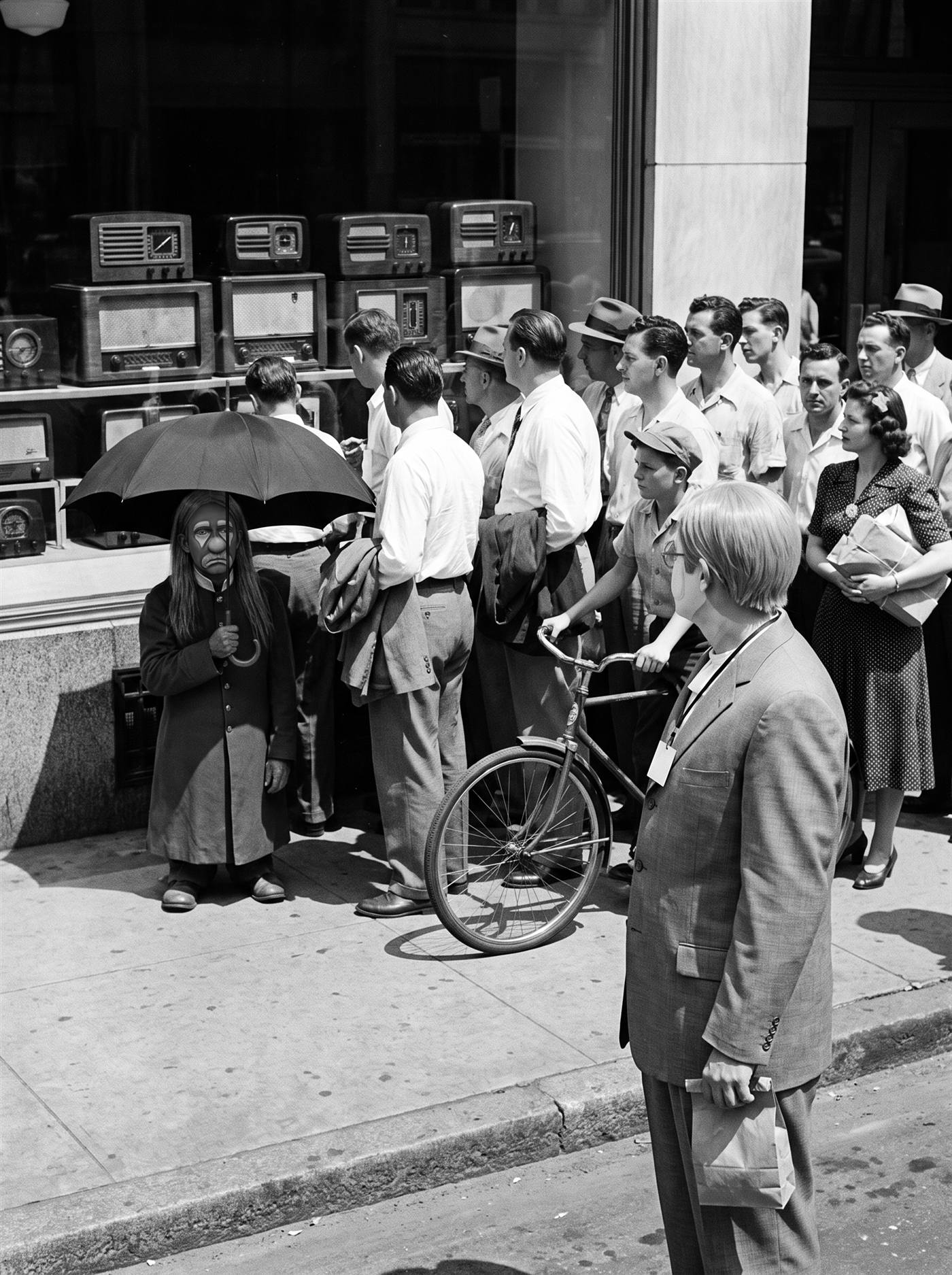
The war began at four in the morning Sunday, Korea time — the middle of Saturday afternoon in New York, with the tape already silent. Sunday the United Nations demanded a withdrawal and the President flew back to Washington; Monday the market did its part of the arithmetic all at once, down 4.65 percent. Ten years and six weeks earlier a cautious man had stood outside a newsreel theater with his umbrella open under a cloudless sky, to general amusement. He opened it again this morning. Nobody laughed this time.
The day's protagonist
The weekend — no symbol.
Move: −4.65% — two days of war, priced in one session
North Korean forces crossed the 38th parallel at about four in the morning on June 25, Korea time — the middle of Saturday afternoon in New York, with the exchange closed and the weekend already begun. By the time the opening bell rang on Monday the United Nations Security Council had demanded a withdrawal, the President had flown back from Missouri, and the first Blair House meeting had run late into Sunday night. The market condensed all of it into one session: down 4.65 percent on roughly twice Friday's volume, the old S&P composite down 5.38. Monday evening the second Blair House meeting committed American air and sea power; Tuesday midday Truman said it plainly — he had ordered United States forces to give the Korean Government troops cover and support. The slide ran three more weeks, 12 percent from Friday's close to the July 13 bottom, and was fully recovered by the end of September. The war was not.
The deeper account
The break came in one piece because the news had nowhere to trade: the invasion began with the tape silent on a Saturday afternoon and the market opened Monday owing two days of history at once.
Thursday the twenty-ninth took another 3.71 percent as the intervention deepened — the President called it a police action at that morning's press conference — and the grind ran to July 13 before it turned. By late September the index stood where the invasion had found it.
Ten years and six weeks separate this page from the newsreel theater of May 1940. The same figure stands at the curb in both photographs, the same umbrella open under the same cloudless sky. The difference is in the crowd: in 1940 nobody looked at him. This morning one man does.
The ground is drab — the color a country reaches for when the weekend goes wrong, back out of the closet five years after it was folded away.
The artifact
Somebody kept the weather card from the fall of France, and somebody — the hand looks the same — kept one from this Monday too, torn where the forecast used to be. The war began with the tape silent on a Saturday afternoon, an ocean and a continent away; the market opened Monday owing two days of history and paid it in one session, down 4.65 percent. The clerk's note is the whole decade in two lines: the umbrella was open by nine, same as the last time. The difference between 1940 and 1950 is that nobody laughed.
Read the card
Printed text is shown plain; the clerk's entries are shown in script.
THE WEATHER · MONDAY, JUNE 26, 1950 — [ the forecast has been torn away ]
- the industrials: 224.35 → 213.91 · down 4.65 percent — two days of war, priced in one session.
- the parallel: crossed at four in the morning, sunday — saturday afternoon here. the tape was silent.
- the council: withdrawal demanded sunday. the composite: down 5.38 — an index seven years unborn.
- MARGIN CLERK'S HAND: the umbrella again. by nine, same as the last time. nobody laughed.
- THE FORECAST IS MISSING. THE UMBRELLA WASN'T.
On Monday, June 26, 1950 — the first session after North Korea crossed the 38th parallel — the Dow fell 4.65 percent to 213.91 and the S&P daily composite fell 5.38 percent. The slide ran to July 13, twelve percent in all close-to-close, and was recovered by late September; the war ran three more years. The card's printed form is the same one a clerk used on May 14, 1940, the day this archive keeps one page earlier.
The ledger — what actually happened
| Measure | Close | Change | Marginalia |
|---|---|---|---|
| Dow Jones | 213.91 | −10.44 · −4.65% | the weekend's war, priced at Monday's bell; closes per the daily record |
| S&P composite | 18.11 · −5.38% | the 90-stock daily composite — the official back-history of an index that would not exist for seven more years | |
| The parallel | 4 a.m. Sunday | Korea time — mid-afternoon Saturday in New York; the tape had all weekend to wait | |
| The answer | Tuesday, midday | "I have ordered United States air and sea forces to give the Korean Government troops cover and support" — Truman, June 27 | |
| The slide | −12.0% by July 13 | close-to-close from Friday June 23 to the 197.46 bottom; recovered by late September. The war ran three more years |
Sources
- MeasuringWorth — Daily Closing Values of the Dow Jones Average (every close, June 23 – July 13, 1950) — https://www.measuringworth.com/datasets/DJA/
- S&P daily composite (90-stock), official back-history series — the −5.38% session and the July double bottom
- Harry S. Truman, statement of June 26 and announcement of June 27, 1950 (Public Papers, via the American Presidency Project and the Truman Library)
- United Nations Security Council Resolutions 82 and 83 — the June 25 demand and June 27 authorization