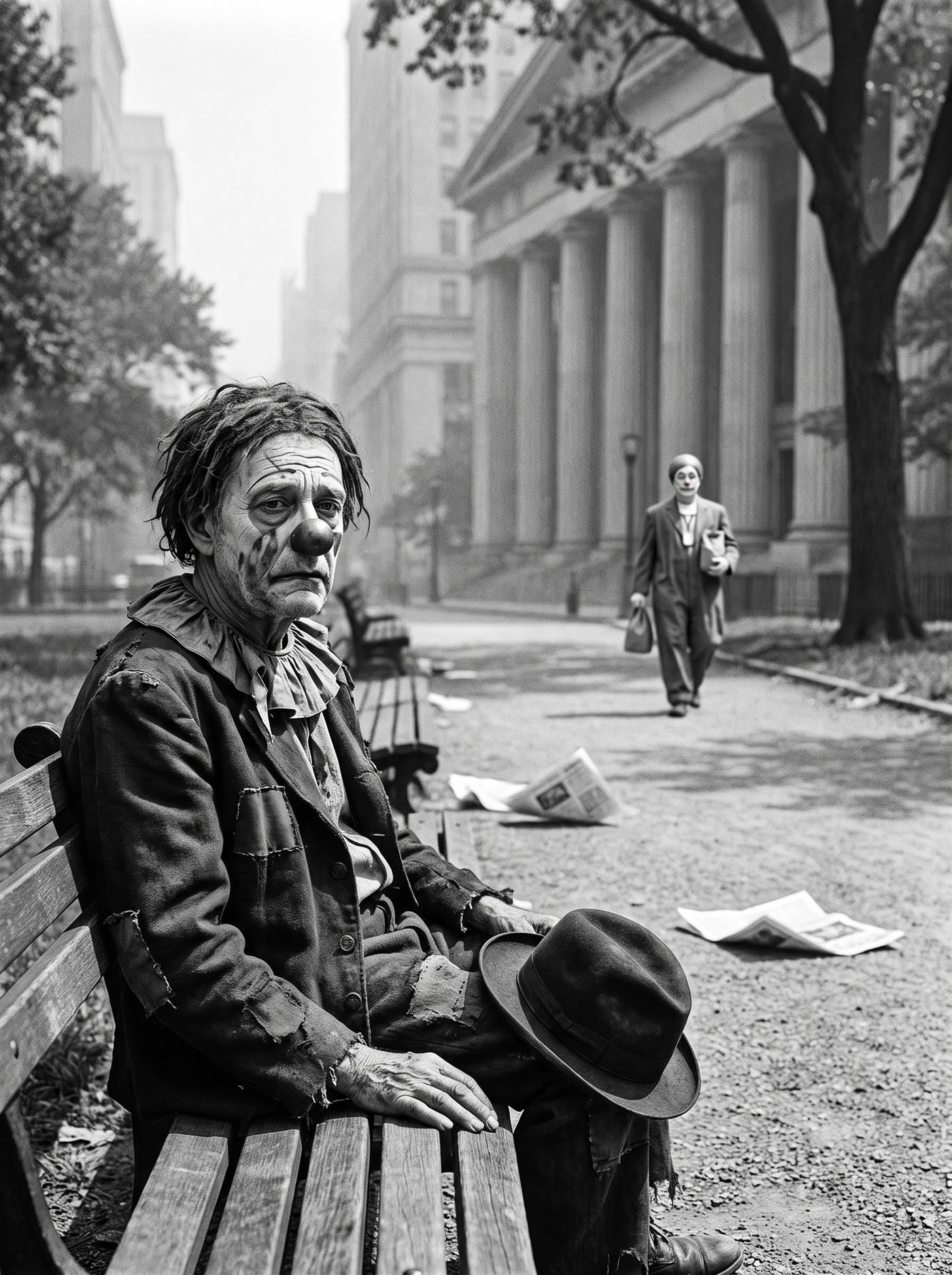
Nobody came
DOW JONES 41.22 · −0.59 · −1.41% · the bottom of everything
The greatest bear market in American history ended on a hot July Friday in front of nobody. The news that day was a reparations conference in Europe, and the market couldn't summon the energy to care; the glamour trusts of 1929 changed hands for pennies; the Dow closed at 41.22, a price last seen before the century began. There was no bell, no drama, no recognition — the falling simply stopped, because everyone who could sell had finished years of doing it.
The day's protagonist
Nobody — no symbol.
Move: 41.22 — and no one there to see it
The documented fact of the day is absence. Down 89 percent from September 1929, back to the price level of 1896, the market had run out of sellers and audience alike: listed value had shrunk from ninety billion dollars to under sixteen, a quarter of the country was out of work, and the day's news — a reparations accord at Lausanne — drew what the Times called a singularly apathetic response. Blue Ridge, the glamour trust floated at the top of the bubble, traded for sixty-three cents. The Dow closed at 41.22 on thin dealings, rose one percent at Saturday's short session, and never closed lower again. No one rang anything; no one believed anything; the greatest bear market in American history ended because it was finished, not because anyone stopped it.
The deeper account
The scale of what ended: NYSE listed value had fallen from nearly ninety billion dollars in September 1929 to under sixteen; General Electric, Sears and U.S. Steel had each lost more than ninety percent; unemployment stood at 24.1 percent.
No contemporary account treats July 8 as a turning point — the recognition is entirely retrospective. The market nearly doubled by September, gave much of it back that winter, and never again touched 41.22.
The full round trip runs through this archive: the Dow did not close above its September 1929 peak until November 23, 1954 — twenty-five years, two months and twenty days later, a day that keeps its own page here.
In the photograph of this day the aftermath clown keeps a place on the bench — the dossier says he is the only one who sees Retail, and at the far end of the empty path, out of focus, the young man with the paper sack is finally walking back. The old clown hasn't turned his head yet. Saturday, he will.
The ground is the ash of the wing of greys; the pigment is tarnished copper — pennies, gone green with neglect. The mourning register stays for the crash days; the bottom wears what's left afterward.
The artifact
The numbers on the ticket are the day's own: the Dow closed at 41.22, eighty-nine percent below September 1929, at a price level last seen before the century began. Blue Ridge and Shenandoah — the glamour investment trusts of the bubble, launched to fanfare in the summer of 1929 — traded for sixty-three and fifty cents a share. The day's real news was a reparations accord in Lausanne, to which the Times recorded Wall Street's "singularly apathetic response." There was no capitulation drama, no bell, no recognition: the market simply stopped falling, in front of nobody, and rose the next morning. It never closed lower again — not that year, not that century.
Read the ticket
Printed text is shown plain; the broker's entries are shown in script.
PAWN TICKET · LOWER MANHATTAN · FRIDAY, JULY 8, 1932 — pledged: one watch, gold-filled, running · loaned: $1.25 · redeemable in ninety days
- the industrials: 41.22 — of every 1929 dollar, eleven cents remain.
- the proud paper of that year, by the share: blue ridge, 63¢ · shenandoah, 50¢
- price level last seen: 1896. a working man's lifetime, returned to sender.
- BROKER'S HAND: quiet. the reparations news came from europe. nobody here looked up.
- IT NEVER CLOSED LOWER AGAIN. NOBODY PRESENT WOULD HAVE BELIEVED IT.
On Friday, July 8, 1932, the Dow Jones Industrial Average closed at 41.22 — down 89 percent from September 3, 1929, the lowest close it would ever record again. The exchange traded Saturdays then: the next morning it rose one percent, and kept rising, nearly doubling by September. No contemporary account treats the day as a turning point; the recognition is entirely retrospective. The Dow did not close above its 1929 peak until November 23, 1954.
The ledger — what actually happened
| Measure | Close | Change | Marginalia |
|---|---|---|---|
| Dow Jones | 41.22 | −0.59 · −1.41% | the lowest close of the twentieth century — never seen again; per the daily record |
| From the peak | −89% | 381.17 on September 3, 1929 → 41.22 — back to the price level of 1896 | |
| The proud paper | 63¢ · 50¢ | Blue Ridge and Shenandoah, the glamour trusts of 1929, by the share | |
| The mood | apathy | Wall Street's "singularly apathetic response" to the day's real news — The New York Times | |
| Saturday | +1.0% | the exchange traded Saturdays then; the turn began the next morning, unnoticed |
Sources
- Library of Congress, Today in History — July 8: the Dow's 41.22, "89 percent below its peak" — https://www.loc.gov/item/today-in-history/july-08/
- MeasuringWorth — Daily Closing Values of the Dow Jones Average (the daily record for the surrounding week) — https://www.measuringworth.com/datasets/DJA/
- Guinness World Records — lowest closing of the DJIA (41.22, July 8, 1932)
- The Motley Fool — "The End of the Worst Crash in History": the NYT's "singularly apathetic response" and the Lausanne accord
- Novel Investor — timeline of the 1929 crash (Blue Ridge 63¢, Shenandoah 50¢)
- University of Michigan Law Quadrangle — listed value $90B → under $16B, 1929–1932