The pallor
S&P 500 1,106.42 · −106.85 · −8.81%
A chamber said no at 1:40 and the color left the market's face. The fall was printed live, against the tally.
The day's protagonist
The tally board — no symbol.
Move: At 1:40 p.m. the noes had it; the Dow fell hundreds of points while the vote was held open
Two weeks after Lehman, the $700 billion rescue came to the House floor carrying both parties' leadership and neither party's members. At 1:40 the count made the outcome clear, and for the first time a market crash was televised as a legislative event — the tape and the tally board falling together, live. Final: 228 to 205. The Dow's −777.68 was the largest point decline ever printed. Members walked out to discover what the no had cost: about $1.2 trillion, the first trillion-dollar session. A revised bill passed on Friday. The market had stopped waiting for it.
The deeper account
Like Lehman's page two weeks earlier, the close is the low: 1106.42, the bottom tick of the session. Twice in one fortnight, nothing was bought back.
The morning had already brought Citigroup's takeover of Wachovia's banking assets and bank failures across Europe. The vote fell on a market already braced.
The S&P's −8.81% stood as the worst day since 1987 for exactly twelve sessions — October 15 printed −9.03%, and December 1 printed −8.93%. This is the autumn that broke its own records.
The revised bill passed October 3. The next page of this wing is what it took to make the market believe it: eight more days of falling, then the largest single day the modern index has ever had.
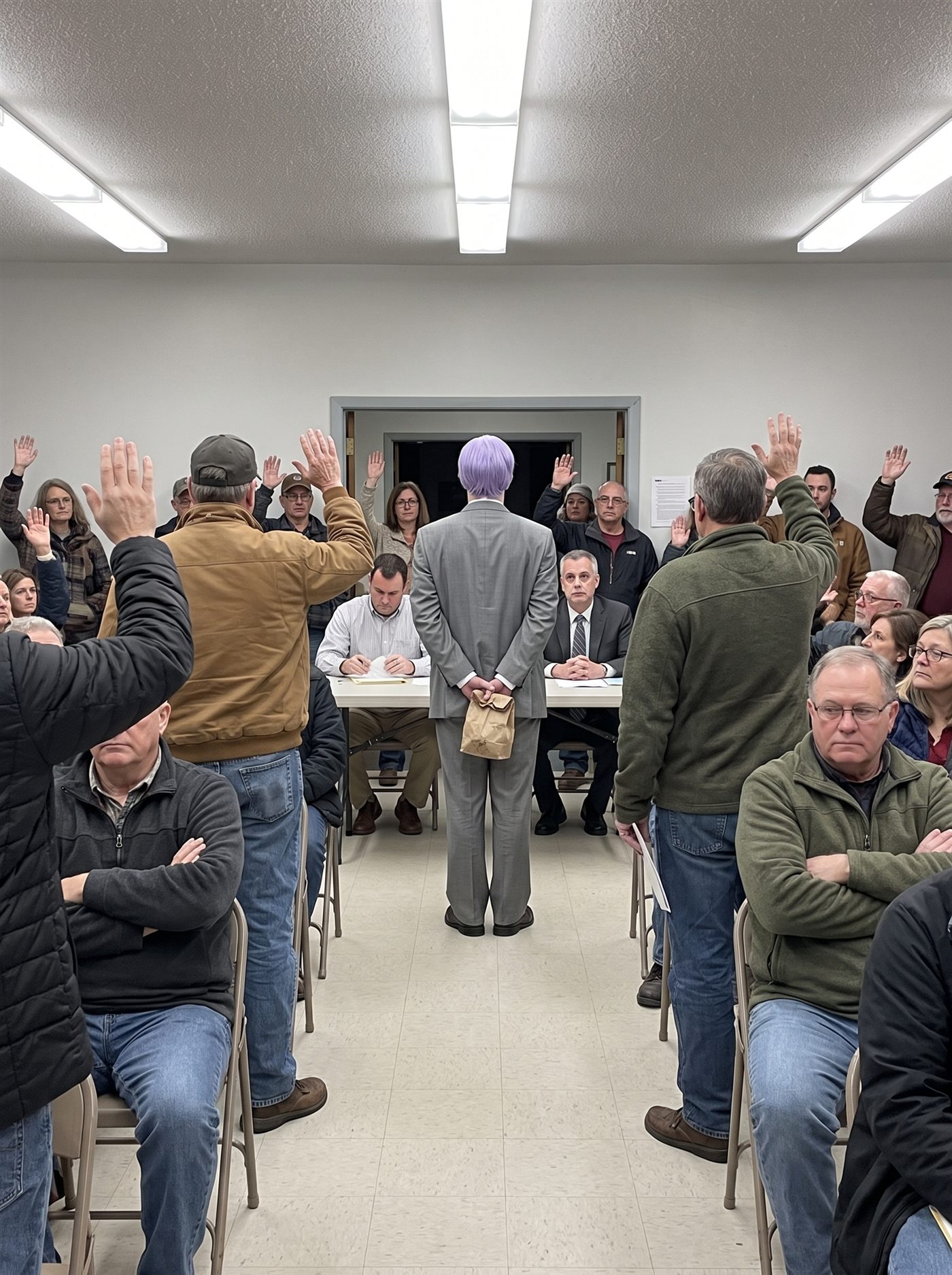
He stood at the back of the hall for the count. Retail had no hand in the vote — only the cost of it. The page keeps him where the photograph found him: behind the last row, watching the arithmetic.
The house's old fall-mark was stamped on this page when it carried a brushstroke; the entrance format keeps the fall in the numbers, which need no ceremony.
The artifact
For the first time a market crash was televised as a legislative event: the tally and the tape falling together, live, from 1:40 onward. The sheet keeps the arithmetic that mattered — twenty-three hands — and the arithmetic it produced: the Dow's largest point fall ever printed to that date, and the first session to erase more than a trillion dollars. The clerk's line is the day's epitaph.
Read the tally sheet
Printed text is shown plain; the clerk's entries are shown in script.
MONDAY, SEPT 29 · THE QUESTION: THE RESCUE, $700,000,000,000 · TALLY OF HANDS
- AYES — 205 · NOES — 228
- the count was clear at 1:40. the vote was held open. the tape read it live.
- NO
- THE COST OF THE NO, DISCOVERED ON THE WALK OUT: ≈ $1,200,000,000,000 · the first trillion-dollar session
- CLERK'S HAND: a revised bill passed friday. the market had stopped waiting.
On Monday, September 29, 2008, the House of Representatives rejected the Emergency Economic Stabilization Act 228–205. The S&P 500 fell 8.81 percent to 1,106.42 — its worst day since October 1987, closing on its exact low — and the Dow fell 777.68 points, the largest point decline in its history to that date. Roughly $1.2 trillion in market value was erased. A revised bill passed on October 3.
The ledger — what actually happened
| Measure | Close | Change | Marginalia |
|---|---|---|---|
| Dow Jones | 10,365.45 | −777.68 · −6.98% | the largest point fall in the average's history — the record stood for a decade |
| S&P 500 | 1,106.42 | −106.85 · −8.81% | the worst day since October 1987 — a title this same autumn took back twice |
| The vote | 228–205 | no; the tape read the tally live, beginning at 1:40 in the afternoon | |
| The cost | ≈ $1.2 trillion | erased from American equities in one session — the first trillion-dollar day |
Sources
- History.com — Dow suffers record-breaking single-day drop — https://www.history.com/this-day-in-history/september-29/dow-suffers-largest-single-day-drop-great-recession
- NPR, September 29, 2008 — House rejects bailout bill, Wall Street shudders — https://www.npr.org/2008/09/29/95180529/house-rejects-bailout-bill-wall-street-shudders
- CNBC — The Financial Crisis: This Day, One Year Ago, Sept. 29, 2008 — https://www.cnbc.com/2009/09/28/the-financial-crisis-this-dayone-year-ago-sept-29-2008.html
- ABC News — Stocks Have Miserable Day After House Vote — https://abcnews.com/Business/MarketTalk/story?id=5912806&page=1