Fair weather, arriving violently
S&P 500 940.51 · +91.59 · +10.79% · closed on the exact high
The morning's news was the worst number the consumer-confidence survey had printed in its forty-year life, and the market went up. The afternoon's mechanism was a meeting that hadn't decided anything yet — the Fed convened at two, tomorrow's half-point cut fully priced — and the market went up faster, nearly doubling its gain in the last hour and closing at its exact session high: plus 10.79 percent, the second-best day since the Depression, bettered only by a Monday two weeks earlier that this archive already keeps. The same day, an ocean away, the most cautious trade in the world was being destroyed by sunshine: Volkswagen, cornered, touched a thousand euros and became briefly the most valuable company on earth while the shorts burned. A trader said it on television that evening: it's just panic and fear, pointed up. Seventeen sessions later the market made a new low.
The day's protagonist
The squeeze — no symbol.
Move: +10.79% with no catalyst — the shorts, not the news, did the buying
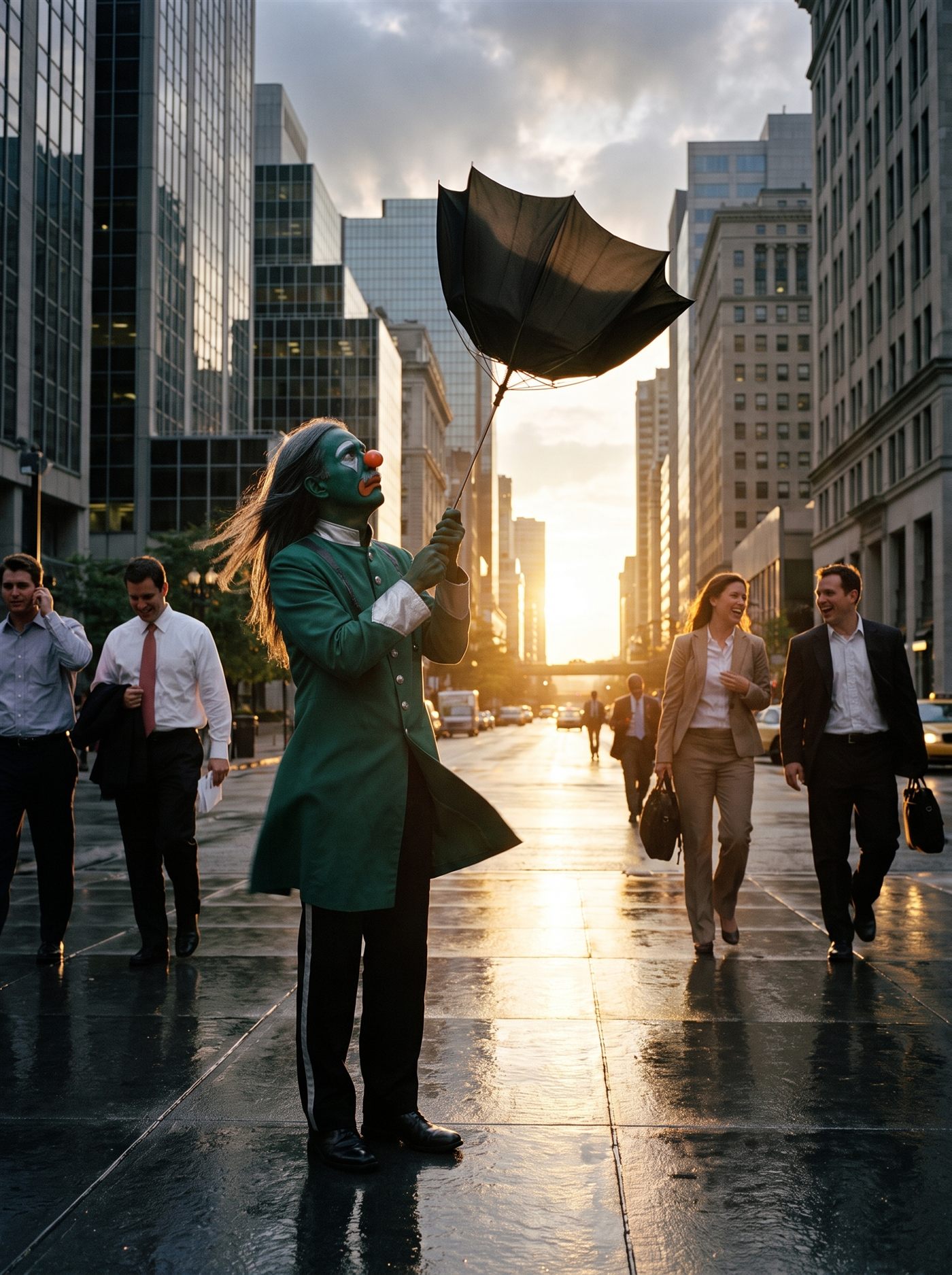
Nobody ever named the reason, because there wasn't one — the wires said so at the time, without embarrassment. The morning's only data was the Conference Board's 38.0, the worst consumer-confidence reading in the survey's history; the afternoon's only event was the Fed convening a meeting whose half-point cut, to one percent, was fully priced for the following day. Into that vacuum the market rose 10.79 percent — the S&P and Nasdaq both closing at their exact session highs, the Dow up 889 after being up as much as 906, nearly doubling its gain in the final hour — while the volatility index fell sixteen percent off the first 80-plus close in its history. The day's true mascot traded in Frankfurt: Volkswagen, cornered by Porsche's quiet accumulation, touched a thousand euros and passed Exxon as the most valuable company on earth while short sellers burned; even in New York, Goldman lagged the rally on fears it was caught in the same fire. A hedge is an umbrella, and this was the day the weather turned good violently enough to blow every umbrella on the street inside out. The traders who said so on television that evening — it's just panic and fear, there's no focus on fundamentals — were right within seventeen sessions: the cut came the next afternoon and the market closed lower; the new low, 752.44, came November 20. That page already hangs on this shelf, four frames along, in the dark of the trench.
The deeper account
The batch's 2008 page belongs to the hedge because the day belonged to his undoing: a squeeze is what happens when the cautious are right for a year and wrong for one afternoon, all at once, at maximum volume. The clearest picture of it wasn't even in New York — it was Volkswagen at a thousand euros, the world's most shorted stock becoming its most valuable company inside a corner.
The traders' verdict, spoken on air that evening, is the honest ledger line: it's just panic and fear, pointed up; the people who drove this market lower are the same people driving it now. The archive prints it because seventeen sessions proved it.
The rhyme with 1931, eight pages back, is exact and deliberate: a record rally on mechanics rather than mending — advance knowledge there, forced covering here — inside a collapse that resumed on schedule. The difference is only that 2008's trench held where 1932 kept digging.
In the photograph of this day the rain has stopped, the street runs gold, everyone laughs coatless — and the one figure dressed for the weather that actually returned in November stands looking up at his umbrella, blown inside out by the improvement. His raindrops are painted on. The real ones were three weeks out.
The artifact
A hedge is an umbrella, and a squeeze is the gust that ruins one from below. The day had no cause anyone could name — a record-worst confidence number in the morning, an undecided Fed meeting in the afternoon, and 10.79 percent of forced sunshine in between, the S&P closing on its exact high while Frankfurt watched the most shorted stock on earth become, for a few hours, the most valuable. The repair estimate was honest: seventeen sessions later the market made a new low at 752.44 — the trench, four pages along this shelf — and every umbrella on the street was back in service. The ticket's cruelty is the hedge's whole occupation: being right eventually pays nothing for one specific afternoon.
Read the ticket
Printed text is shown plain; the counterman's entries are shown in script.
REPAIRS · CLAIM TICKET · OCTOBER 28, 2008
- item: one black umbrella. condition: canopy inverted, spokes bent skyward. cause of damage: fair weather, arriving violently. estimated repair: three weeks.
- the five hundred: 848.92 → 940.51 · up 10.79 percent — closed on the exact high — the shorts did the buying.
- fear's gauge: down 16.4 from its first close over 80.
- frankfurt, same day: the most shorted stock on earth, briefly the most valuable. a corner, not a cure.
- COUNTERMAN'S HAND: he was right for a year. he was wrong for one afternoon — ten point eight percent worth.
- READY FOR COLLECTION NOVEMBER 20. THE WEATHER WILL BE BACK BY THEN.
On Tuesday, October 28, 2008, the S&P 500 rose 10.79 percent to 940.51, closing at its session high — the second-best day since the Depression era, behind only October 13, 2008, already on this shelf. The VIX fell 16.4 percent from its record 80.06 close. The Fed's half-point cut arrived the next afternoon and the market closed lower; on November 20 the S&P closed at 752.44, a new bear-market low, 20 percent below this close.
The ledger — what actually happened
| Measure | Close | Change | Marginalia |
|---|---|---|---|
| S&P 500 | 940.51 | +91.59 · +10.79% | closed EXACTLY at the session high; the only better day since 1933 was two weeks earlier — the archive's Oct 13 page; per the feed and the day's press, to the cent |
| Dow Jones | 9,065.12 · +10.88% | +889.35, the second-biggest point gain ever at the time; as much as +906 intraday; "nearly doubled its gain in the last hour" | |
| VIX | 66.96 · −16.4% | off 80.06 — the first close above 80 in the gauge's history, printed the day before | |
| The morning's news | confidence: 38.0 | the lowest reading in the survey's forty years, released at ten — the market rallied through it | |
| The trap | 752.44 · Nov 20 | a NEW bear low, 20.0% below this close, seventeen sessions later — the archive's "trench" page. The cut itself, delivered next day, closed −74 |
Sources
- The market-data feed + the official daily record — closes, the close-at-high, the VIX path (feed and press agree to the cent)
- AP (via KPBS), "Dow Ends Up 889 Points On Expected Rate Cut" — the point-gain ranking, the confidence print, the priced-in cut
- CNBC Fast Money, Oct 28, 2008 (full text) — the Finerman and Adami verdicts; Goldman lagging on Volkswagen-squeeze exposure
- CNN/Money day-of market report (via excerpts; the page itself is dead — flagged) — "as much as 906," the last-hour doubling, the rankings
- FOMC statement, Oct 29, 2008 (federalreserve.gov, verbatim); Macroption's VIX history — the record 80.06 close