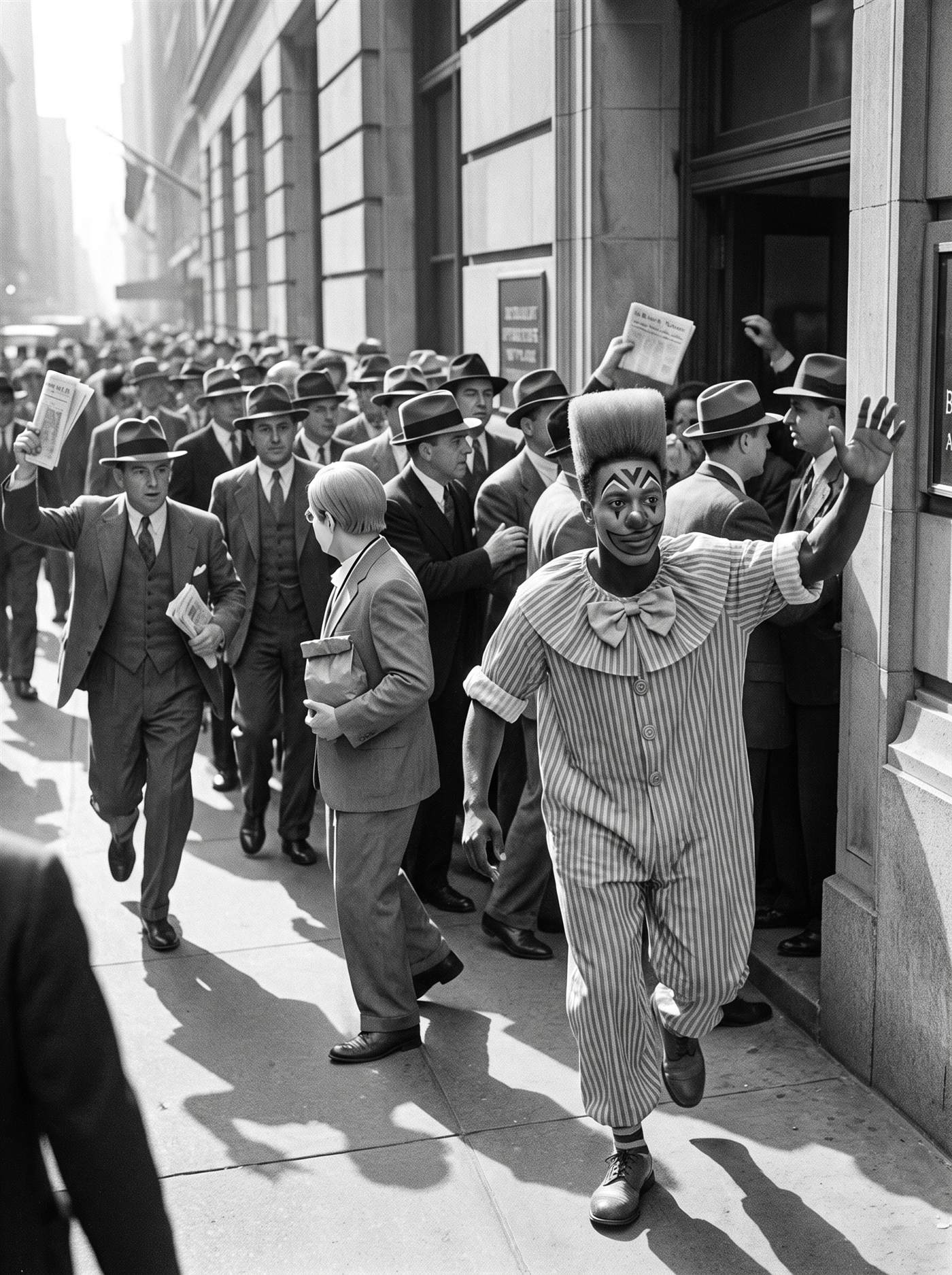
The frenzy, labeled
DOW JONES 148.12 · +10.03 · +7.26% · the war babies
Germany invaded Poland on Friday and the market rose slightly. Britain and France declared war on Sunday. Monday was Labor Day. So Tuesday morning two full days of history and every pent-up order in the country hit the ten o'clock bell at once: up 7.26 percent, nearly six million shares — the heaviest tape since 1937 — with the so-called war babies leading the movement. The Exchange's facilities were taxed to the breaking point. Brokerages passed around statistics on how the war brides of 1914 had fared. The last war had made them brides; this one made them babies; the trade was the same trade.
The day's protagonist
The war baby — no symbol.
Move: +7.26% — the worst news in the world, bought in a frenzy
Heavy industry expected to feed the Allied war orders — that was the whole trade, and the wires had a name for it by Tuesday night: the war babies. Germany had invaded on Friday and the Dow rose slightly; the declarations came Sunday with the tape silent; Monday was Labor Day. Tuesday it all arrived at once: up 7.26 percent to 148.12 on 5,934,350 shares, the heaviest volume since October 1937, speculators buying in a sort of frenzy while the Exchange's facilities were taxed to the breaking point. Steel led — over the rally week Bethlehem gained thirty percent and U.S. Steel thirty-one — with the chemicals and anything else an army consumes close behind, while Woolworth and Eastman Kodak, peacetime stocks, sagged. It was a rotation, not a boom: Treasuries fell hard the same week. The pop ground on to 155.92 by September 12 — 18.7 percent off the August low, and a peak the index would not see again for years. The bear resumed, and its bottom is three pages ahead.
The deeper account
The market had risen on the invasion itself, Friday, by less than a point. It was the declarations — the certainty — that it bought. This archive will watch certainty outbid peace again: the prewar rally of March 2003 is six pages ahead and sixty-four years on, and it is the same trade.
The brokerages knew exactly what they were selling. They circulated statistics on how the "war brides" of 1914 had fared — the last war's name for the same stocks. Professionals took hold, one paper wrote, in a manner reminiscent of 1929.
In the photograph of this day the tall one is a stride ahead of the crowd at the broker's door, one arm up, beckoning without looking back. He never looks back. The one with the paper bag is several places deep in the press, following, as he always followed.
The ground is the street before the lights; the pigment is foundry glow — the color of the furnaces the orders were about to light, and of nothing else good.
The artifact
The brokerages really did this: with the declarations two days old they circulated statistics on how the "war brides" of 1914 had fared, so clients could buy the Second World War with the confidence of the First. The clerk's column caught the day as it ran — up 7.26 percent, 5,934,350 shares, the heaviest tape since 1937, steel leading, the Exchange's facilities taxed to the breaking point, speculators buying in what the Chronicle itself called a sort of frenzy. The circular's one honest line is the small one: offered without guarantee of repetition. The rally peaked a week later at a level the index would not see again for years.
Read the circular
Printed text is shown plain; the clerk's entries are shown in script.
FOR THE INFORMATION OF CLIENTS · SEPTEMBER 1939 — HOW THE WAR BRIDES OF 1914 FARED
- THEN: the steels: multiplied. the powders: multiplied. the rails: carried it all. the peace stocks: waited.
- NOW: the industrials: up 7.26. 5,934,350 shares — most since '37. steel leading. frenzy.
- clients are reminded that the 1914 comparison is offered without guarantee of repetition.
- MARGIN CLERK'S HAND: same trade. new label. they're calling them babies this time.
- THE LAST WAR MARRIED THEM. THIS ONE IS RAISING THEM.
On Tuesday, September 5, 1939 — the first session after Britain and France declared war — the Dow rose 7.26 percent to 148.12 on 5,934,350 shares, the heaviest volume since October 1937, with the "war babies" (the contemporary wire's own label) leading. The rally ran to 155.92 by September 12, 18.7 percent off the August low, a peak the index would not see again for years; the bear resumed and bottomed in April 1942.
The ledger — what actually happened
| Measure | Close | Change | Marginalia |
|---|---|---|---|
| Dow Jones | 148.12 | +10.03 · +7.26% | from Saturday's half-session close; two days of war, priced upward at one bell; per the daily record |
| S&P composite | 12.64 · +11.86% | the 90-stock daily composite, broader and wilder than the Dow that morning | |
| Volume | 5,934,350 shares | largest since October 19, 1937, and before that July 1933 — per the Commercial & Financial Chronicle's own table | |
| The rally | +18.7% by Sept 12 | August 24 low to the 155.92 peak — which the index would not see again for years | |
| The lottery ticket | 7/8 → 6 → 3½ | Guantanamo Sugar, "long unnoticed" — Tuesday's high and the week's fade, per TIME |
Sources
- Commercial & Financial Chronicle, September 9, 1939 (Vol. 149 No. 3872, via FRASER) — the volume table, "the so-called war babies leading the movement", the frenzy — https://fraser.stlouisfed.org/title/commercial-financial-chronicle-1339/september-9-1939-553094
- MeasuringWorth — Daily Closing Values of the Dow Jones Average (every close, Aug 24 – Sept 13, 1939) — https://www.measuringworth.com/datasets/DJA/
- TIME — "Markets: Gyrations" (Sept 18, 1939): the week's leaders, Guantanamo Sugar, "Heavy Industries carried the biggest label: 'War Babies.'"
- S&P daily composite (90-stock), official back-history series — the +11.86%