The reach, held
S&P 500 368.95 · +1.64 · +0.45% · a quarter point from the shelf
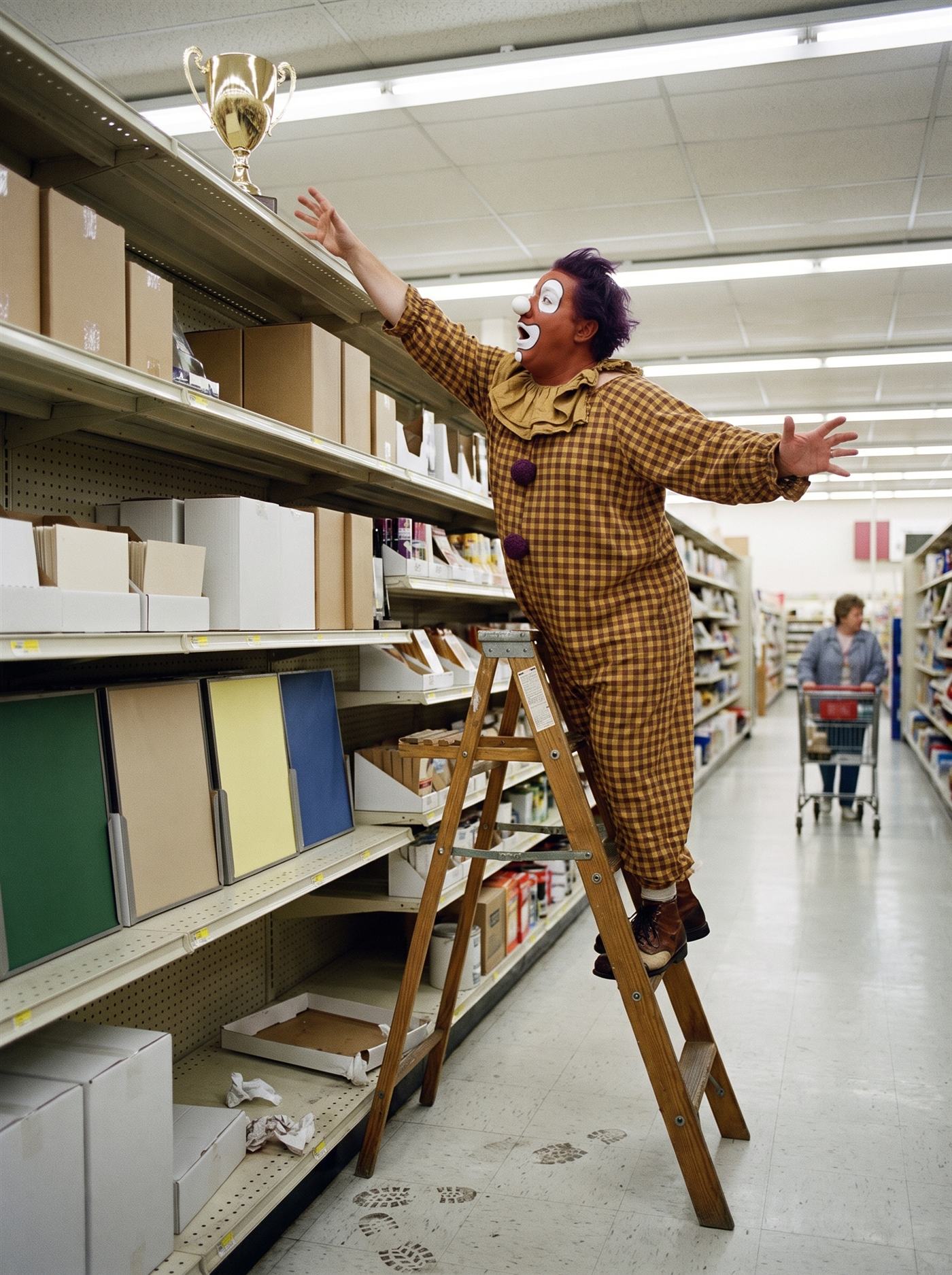
The number on the top shelf was 3,000 and the whole soft-landing summer had been a stepladder toward it — four sessions, a hundred and nine points, the papers' graphics desks ready. Monday the close came to 2,999.75, a quarter point short, the S&P at a record 368.95 alongside. And then the strangest print in the archive's modern record: Tuesday closed at 2,999.75 again. Exactly. Unchanged to the penny, fingertips at the same spot on the same shelf, the ladder teetering, the reach held for two full days. It never got closer. Seventeen days later Iraq crossed into Kuwait, the fall took the Dow past the bear line by October, and the shelf was not reached until April 1991, by which time the reaching meant something else entirely.
The day's protagonist
The quarter point — no symbol.
Move: 2,999.75 · 2,999.75 — the same close, twice, and never closer
The record here is the record itself: the Dow closed Monday at 2,999.75 — a new all-time high, a quarter of one point below the number every headline was pre-set for — and then closed Tuesday at 2,999.75 again, exactly, a double print confirmed in the daily record and remembered by the wires as the two July occasions the Dow failed to finish above 3,000. By the standard account the ticks had crossed the line intraday the Friday before; the close never followed. What makes the pause eerie in hindsight is what the pause was made of: a soft-landing summer, decent earnings, a market three weeks from an invasion nobody priced. Iraq crossed into Kuwait on August 2; the archive's embargo-Monday page sits seventeen days along this shelf, and October's bottom — 295.46 on the S&P, a whisker inside the bear line; 2,365.10 on the Dow, well through it — closed the argument. When 3,000 finally printed on April 17, 1991, the Gulf War was won, the Fed was easing, and the Exchange's officials made a special trip to ring the closing bell — for a number the market had held in its fingertips, twice, nine months before, and let go without ever knowing it was letting go.
The deeper account
The double print has no companion in the archive's modern record: an index of thirty moving parts, closing at the same hundredth twice at an all-time high, at a round number's doorstep. No mechanism explains it and none is needed — it reads, at this distance, like the market holding its breath.
This page joins the war batch's Kuwait page to complete 1990's sentence: the reach in July, the invasion in August, the bottom in October, the resolution — Desert Storm's night-lens green — in January. Four pages, one year, and the top shelf unmoved through all of it.
In the photograph of this day the fall is nowhere in frame. That is the point. His fingertips are inches from the cup, the teeter is held, the aisle is quiet, the shopper passes — and the thing that ends the reach is not the ladder, not the shelf, not him. It is seventeen days away, in a different aisle of the world.
The ground is fluorescent-flat dark; the pigment is the trophy's gold — unengraved, because nobody ever got to write the number on it.
The artifact
The tag records the archive's strangest double print with the only tone it can bear: inventory. The item was a round number; the price was 3,000, even; and the reach came in at 2,999.75 on Monday and 2,999.75 on Tuesday — the same close, to the penny, at an all-time high, at the doorstep of the century's most anticipated milestone since the last one. It never got closer. Seventeen days later Iraq crossed into Kuwait — the embargo Monday hangs one page along this shelf — and by October the Dow had fallen through the bear line the S&P missed by a whisker. Assistance arrived April 17, 1991, on victory and easing, with the closing bell rung specially. The cup, per the record, was engraved for a different summer.
Read the tag
Printed text is shown plain; the stockroom entries are shown in script.
SHELF TAG · JULY 1990 — TOP SHELF ITEM — ask for assistance.
- item: one trophy cup, unengraved. remaining: one. price: 3,000 — even.
- monday's reach: 2,999.75 — a quarter point short. tuesday's reach: 2,999.75 — the same. to the penny.
- the S&P, meanwhile, at a record of its own: 368.95.
- STOCKROOM HAND: he reached it twice, identically. seventeen days later the ladder was needed elsewhere.
- ASSISTANCE ARRIVED APRIL 17, 1991.
On Monday, July 16, 1990, the S&P 500 closed at a record 368.95 and the Dow at a record 2,999.75 — and the Dow closed at 2,999.75 again the next day, exactly. Iraq invaded Kuwait on August 2; the October 11 bottom put the S&P down 19.92 percent and the Dow down 21.16; the Dow first closed above 3,000 on April 17, 1991.
The ledger — what actually happened
| Measure | Close | Change | Marginalia |
|---|---|---|---|
| S&P 500 | 368.95 | +1.64 · +0.45% | the record close — the number the October bottom would miss bearing by a whisker; per the official series |
| Dow Jones | 2,999.75 · twice | the record close, a quarter point shy of 3,000 — printed again, exactly, the next day; per the daily record both days | |
| The flirtation | July 13, intraday | the first trade above 3,000, by the standard account — the close never followed | |
| The trap | Kuwait · 17 days | the archive's embargo Monday follows directly; by Oct 11 the S&P sat −19.92% and the Dow −21.16% from this page | |
| The shelf, reached | April 17, 1991 | 3,004.46 — on victory and easing, with the closing bell rung specially; the S&P had recovered its own record by mid-February |
Sources
- MeasuringWorth — Daily Closing Values of the Dow Jones Average (the double print verified on both days; the run-in, the October bottom, the April 1991 crossing — queried directly) — https://www.measuringworth.com/datasets/DJA/
- The official S&P daily series — the 368.95 record; the October 295.46; the mid-February 1991 recovery
- UPI, "Dow closes above 3000" (April 17, 1991) — the two-July-occasions line, the special bell (excerpt-lineage, so labeled)
- The standard milestone chronicle — the July 13 intraday cross (single-source, so labeled); TIME (Aug 1989) — the 3,000-fever prehistory